Showing posts with label History. Show all posts

Thursday, July 20, 2017

No Selfies Here, yet

Today is the anniversary of the Apollo 11 Moon Landing.  Earlier this year, NASA launched (see what I did there?) a new database of images.  From the press release, "The NASA Image and Video Library website consolidates imagery spread across more than 60 collections into one searchable location."

You can access the images here.  Here is an image I downloaded from the database, showing Neil Armstrong coming down the ladder of the LEM.


And another of the Earth taken from the spacecraft.


In this year, the centennial of the birth of John F. Kennedy, the Brave Astronaut shares with you, the 1962 speech in which the President laid out the plans to go to the moon.


Thursday, July 6, 2017

James K. Polk - The Napoleon of the Stump

James K. Polk, the 11th President died shortly after leaving office, having served only one term in office.  But in those four years, he accomplished a great deal for the country.  A great deal more than any other one-term presidents that we have ever had, or um, currently have.

In the afterlife, James K. Polk has had several in[term]ents.  When he died of cholera at his home in Tennessee, he was buried outside of Nashville.  His remains were moved a year later to his former home.  Then in 1893, after the family home was sold and demolished, Polk (and his wife, Sarah) were disinterred and moved to the grounds of the Tennessee state Capitol.

Now, more than 100 years later, there is a movement to move the Polks again, this time to the Polk childhood home in Columbia Tennessee.  You can read more here.  This post is really just an opportunity to have this song appear on this blog.


Wednesday, July 20, 2016

Space: The Final Frontier

Today is the anniversary of the Apollo Moon Landing, July 20, 1969.  As of today (and for the foreseeable future, it would seem), there have only been 12 men who have walked on the moon.  They are part of a group of individuals who have been in space.  Anyone want to hazard a guess as to how many people that is?

536
(as of November 2013, from Wikipedia)

So on this anniversary, here is a list of those "Brave Astronauts" who journeyed to the moon.  Of that number, only seven are still alive. (originally from kottke)
  1. Neil Armstrong, 1930-2012
  2. Buzz Aldrin, b. 1930
  3. Pete Conrad, 1930-1999
  4. Alan Bean, b. 1932
  5. Alan Shepard, 1923-1998
  6. Edgar Mitchell, 1930-2016
  7. David Scott, b. 1932
  8. James Irwin, 1930-1991
  9. John W. Young, b. 1930
  10. Charles Duke, b. 1935
  11. Eugene Cernan, b. 1934
  12. Harrison Schmitt, b. 1935
Here's a video mashup of space movies, for your entertainment (Luc Bergeron's Space Story, via kottke)

Thursday, June 30, 2016

Wait, How Old Were They?

We have arrived at the final post for the Signers of the Declaration of Independence.  Next week we will celebrate the independence of our nation - and of course, there will be the traditional viewing of 1776, but please take a moment to peruse the list below - noting the ages of the "Founding Fathers" and other prominent personalities of the age on July 4, 1776 [from the Journal of the American Revolution, via kottke].
  1. Andrew Jackson, 9
  2. (Major) Thomas Young, 12
  3. Deborah Sampson, 15 
  4. James Armistead, 15 
  5. Sybil Ludington, 15 
  6. Joseph Plumb Martin, 15 
  7. Peter Salem, 16* 
  8. Peggy Shippen, 16 
  9. Marquis de Lafayette, 18 
  10. James Monroe, 18 
  11. Charles Pinckney, 18 
  12. Henry Lee III, 20 
  13. Gilbert Stuart, 20 
  14. John Trumbull, 20 
  15. Aaron Burr, 20 
  16. John Marshall, 20 
  17. Nathan Hale, 21
  18. Banastre Tarleton, 21 
  19. Alexander Hamilton, 21* 
  20. John Laurens, 21 
  21. Benjamin Tallmadge, 22 
  22. Robert Townsend, 22 
  23. George Rodgers Clark, 23 
  24. David Humphreys, 23 
  25. Gouveneur Morris, 24 
  26. Betsy Ross, 24 
  27. William Washington, 24 
  28. James Madison, 25 
  29. Henry Knox, 25 
  30. John Andre, 26 
  31. Thomas Lynch, Jr., 26^ 
  32. Edward Rutledge, 26^ 
  33. Abraham Woodhull, 26 
  34. Isaiah Thomas, 27 
  35. George Walton, 27*^ 
  36. John Paul Jones, 28 
  37. Bernardo de Galvez, 29 
  38. Thomas Heyward, Jr., 29^ 
  39. Robert R. Livingston, 29 
  40. John Jay, 30 
  41. Tadeusz Kosciuszko, 30 
  42. Benjamin Rush, 30^ 
  43. Abigail Adams, 31 
  44. John Barry, 31 
  45. Elbridge Gerry, 31^ 
  46. Casimir Pulaski, 31 
  47. Anthony Wayne, 31 
  48. Joseph Brant, 33 
  49. Nathanael Greene, 33 
  50. Thomas Jefferson, 33^ 
  51. Thomas Stone, 33*^ 
  52. William Hooper, 34^ 
  53. Arthur Middleton, 34^ 
  54. James Wilson, 34*^ 
  55. Benedict Arnold, 35
  56. Samuel Chase, 35^ 
  57. Thomas Knowlton, 35 
  58. William Paca, 35^ 
  59. John Penn, 35^ 
  60. Hercules Mulligan, 36 
  61. Andrew Pickens, 36 
  62. Haym Solomon, 36 
  63. John Sullivan, 36 
  64. George Clymer, 37^ 
  65. Charles Cornwallis, 37 
  66. Thomas Nelson, Jr., 37^ 
  67. Ethan Allen, 38 
  68. Charles Carroll, 38^ 
  69. King George III, 38 
  70. Francis Hopkinson, 38^ 
  71. Carter Braxton, 39^ 
  72. George Clinton, 39 
  73. John Hancock, 39^ 
  74. Daniel Morgan, 39 
  75. Thomas Paine, 39 
  76. Patrick Henry, 40 
  77. Enoch Poor, 40 
  78. John Adams, 40^ 
  79. Daniel Boone, 41 
  80. William Floyd, 41^ 
  81. Button Gwinnett, 41*^ 
  82. John Lamb, 41* 
  83. Francis Lightfoot Lee, 41^
  84. Paul Revere, 41 
  85. Thomas Sumter, 41 
  86. Robert Morris, 42^ 
  87. Thomas McKean, 42^ 
  88. George Read, 42^ 
  89. John Dickinson, 43 
  90. John Glover, 43 
  91. Benjamin Edes, 43 
  92. Samuel Huntington, 44^ 
  93. Richard Henry Lee, 44^ 
  94. Charles Lee, 44 
  95. Francis Marion, 44 
  96. Lord North, 44 
  97. George Washington, 44 
  98. Joseph Galloway, 45 
  99. Robert Treat Paine, 45^ 
  100. Friedrich von Steuben, 45 
  101. Richard Stockton, 45^ 
  102. Martha Washington, 45 
  103. William Williams, 45^ 
  104. (Dr.) Thomas Young, 45* 
  105. Josiah Bartlett, 46^ 
  106. Henry Clinton, 46 
  107. Joseph Hewes, 46^ 
  108. William Howe, 46 
  109. George Ross, 46^ 
  110. William Whipple, 46^ 
  111. Caesar Rodney, 47^ 
  112. John Stark, 47 
  113. Mercy Otis Warren, 47 
  114. William Ellery, 48^ 
  115. Horatio Gates, 48 
  116. Artemas Ward, 48 
  117. Oliver Wolcott, 49^ 
  118. Abraham Clark, 50^ 
  119. Benjamin Harrison, 50^ 
  120. George Mason, 50 
  121. Lewis Morris, 50^ 
  122. Lord Stirling, 50 
  123. George Wythe, 50*^ 
  124. Guy Carleton, 51 
  125. John Morton, 51*^ 
  126. Comte de Rochambeau, 51
  127. Lyman Hall, 52^ 
  128. James Rivington, 52* 
  129. Samuel Adams, 53^ 
  130. Comte de Grasse, 53 
  131. John Witherspoon, 53^ 
  132. John Burgoyne, 54 
  133. Johann de Kalb, 55
  134. Roger Sherman, 55^ 
  135. Thomas Gage, 56 
  136. James Smith, 56^ 
  137. Israel Putnam, 58 
  138. Comte de Vergennes, 58 
  139. Lewis Nicola, 59* 
  140. George Germain, 60 
  141. Philip Livingston, 60^ 
  142. George Taylor, 60*^ 
  143. Matthew Thornton, 62^ 
  144. Francis Lewis, 63^ 
  145. John Hart, 65*^ 
  146. Stephen Hopkins, 69^ 
  147. Benjamin Franklin, 70^ 
  148. Samuel Whittemore, 81
*  Evidence may exist that this age is not precise, or only a birth year is known
^  Signers of the Declaration of Independence (average signer age was 44)

Monday, February 22, 2016

Martha Washington's Great Cake

Today is George Washington's birthday - yes, yes, I know we had President's Day last Monday, but today is the actual day of his birth.

So by all means, you should make Martha Washington's Great Cake (from the Mount Vernon website).

Great Cake

Ingredients
Cake:
  • 1 1/2 cups currants 
  • 1/3 cup chopped candied orange peel 
  • 1/3 cup chopped candied lemon peel 
  • 1/3 cup chopped candied citron 
  • 3/4 cup Madeira, divided 
  • 1/4 cup French brandy 
  • 3 cups all-purpose flour, sifted 
  • 1/2 cup slivered almonds 
  • 1/2 teaspoons ground nutmeg 
  • 1/2 teaspoons ground mace 
  • 3/4 cup unsalted butter, softened 
  • 1 1/2 cups sugar 
  • 3 large eggs, separated
  • Sugar Icing (recipe follows) (optional) 

Sugar Icing:
  • 3 large egg whites at room temperature 
  • 1 1/2 cups sugar 
  • 2 tablespoons rose water or orange-flower water

In the bowl of an electric mixer, start beating the egg whites on low speed, gradually adding 2 tablespoons of the sugar. After about 3 minutes, or when they just begin to form soft peaks, increase the speed to high and continue adding the sugar, 2 tablespoons at a time, beating until all the sugar is incorporated and the egg whites form soft peaks. Add the rose water, and continue beating to form stiff peaks. Use immediately to ice the cake.

Instructions for Cake
  1. Combine the currants, orange and lemon peels, and citron in a large bowl. Add 1/2 cup of the Madeira, and stir to combine. Cover with plastic wrap, and set aside for at least 3 hours, or as long as overnight. Stir the remainder of the Madeira together with the brandy, cover, and set aside. 
  2. When ready to bake the cake, preheat the oven to 325°F. Grease and flour a 10-inch tube pan. 
  3. Drain the fruits in a large strainer set over a bowl, stirring occasionally to extract as much of the Madeira as possible. Add the strained Madeira to the set-aside Madeira and brandy. 
  4. Combine 1/4 cup of the flour with the fruit, and mix well. Add the almonds, and set aside. Sift the remaining flour with the nutmeg and mace. 
  5. In the bowl of an electric mixer, cream the butter until it is light. Add the sugar, 1/2 cup at a time, beating for several minutes after adding each ingredient. Whisk the egg yolks until they are light and smooth, and add them to the butter and sugar. Continue to beat for several minutes, until the mixture is light and fluffy. 
  6. Alternately add the spiced flour, 1/2 cup at a time, and the Madeira and brandy, beating until smooth. 
  7. In a separate bowl, beat the egg whites to form stiff peaks. By hand, gently fold them into the batter, combining lightly until well blended. By hand, fold in the fruit in thirds, mixing until well combined. 
  8. Pour the batter into the prepared pan, smoothing the top with an offset spatula or the back of a spoon. Bake for about 1 1/2 hours, or until a wooden skewer inserted in the center comes out clean. Set the cake on a wire rack to cool in the pan for 20 minutes. If serving the cake plain, turn it out of the pan to cool completely. If finishing it with icing, turn the warm cake out of the pan onto a baking sheet, and proceed with the icing. 
  9. To ice the cake, spread Sugar Icing generously onto the surface, piling it high and swirling it around the top and sides. Set in the turned-off warm oven and let sit for at least 3 hours, or until the cake is cool and the icing has hardened. The icing will crumble when the cake is sliced.

For those of you who may be interested in the Virginia Gentleman Farmer, the Library of Congress recently restored a book in Washington's hand on the weaving industry (and the work done at Mount Vernon) and the effect it had on his own personal (and political) goals and mission.  You can read more here.

Thursday, February 18, 2016

Signers: Delaware and Georgia

There is a new restaurant open now in Washington DC.  It is called Declaration and it is located in the North Shaw neighborhood. (well that's great there, Brave Astronaut, but why do I care?)  If you choose to dine at Declaration, you can order your very own "Signers-created Pizza."  So below, and from here on out, I will tell who what pizza you can have it you are fond of a particular signer.

Today's post concerns the First State and the southernmost colony.

Delaware

  • George Read (1733-1798), a lawyer initially voted against the resolution on independence as proposed by Richard Henry Lee, but later joined with the majority in signing the Declaration.  In 1776, Read returned home to Delaware to chair the new state's Constitutional Convention.  In 1777 he became the emergency governor and led the state through the Revolution.  The final office he held before his death was Chief Justice of the State Supreme Court.
  • Caesar Rodney (1728-1784), had no formal education, but served as a clerk in Delaware which exposed him to politics.  An ardent patriot, Rodney was a strong voice for independence.  Following the signing of the Declaration, Rodney returned home to serve as President of the State of Delaware and also served as a commander in the Delaware militia.  He suffered a number of physical ailments and was never in good health.  He died while serving as Speaker of the Delaware Assembly.
  • Thomas McKean (1734-1817), served multiple states and jurisdictions over the course of a long political career.  Among many roles, McKeon served as Governor of Pennsylvania, President of Delaware, and was a Colonel in the New Jersey militia.  At Declaration, you can order the "Thomas McKeon," a pizza with ricotta, parmesan, fresh mozzarella, sausage, idiazabal cheese, brussels sprouts.

Georgia

  • Button Gwinnett (1735-1777), an ardent revolutionary, Gwinnett represented Georgia but had political enemies at home.  Hoping to head Georgia's militia following his signing of the Declaration, the position instead went to his political rival.  Gwinnett challenged the man to a duel and Gwinnett was shot and died three days later at the age of 42.
  • Lyman Hall (1724-1790), Dr. Lyman Hall came to the Continental Congress initially undecided on independence.  He was for it, but the residents of Georgia weren't so sure.  He ultimately signed the document and paid for it when the British burned his home in Georgia and he was forced to flee to South Carolina and later Connecticut.  At Declaration, the Lyman Hall pizza features roasted celery, carrot, onions, oven roasted amish chicken, mushrooms.
  • George Walton (1741-1804), Walton was also a devout patriot in Georgia, and was closely aligned with Gwinnett.  After signing the Declaration, he returned to Georgia, serving in the Georgia militia.  He later served as Governor and Chief Justice in the Peach State.

Thursday, February 4, 2016

Signers: The Declaration Committee


On June 11, 1776, the Second Continental Congress appointed a committee of five individuals to draft and submit to the Congress for its approval.

The five individuals were:
  • John Adams - firebrand member of the Congress, chief advocate for independence, representative from the Massachusetts Bay Colony.  Adams had made a name for himself prior to joining the Congress as an attorney in Massachusetts.  He would, of course go on to serve as the 2nd President of the United States.  Upon his death on July 4, 1826, he outlived by a few hours, his successor as President, 
  • Thomas Jefferson - The epitome of the American Renaissance man, Jefferson was the primary scribe of the Declaration of Independence, serving as a delegate from Virginia.  After losing to John Adams in 1796, Jefferson won the presidency in 1800, going on to serve two terms as the 3rd President of the United States.
  • Benjamin Franklin - the elder statesman of the Congress, representing Pennsylvania, brought gravitas to the Committee of Five.  After the establishment of the United States, Franklin served as the country's first Postmaster.
  • Robert Livingston - from New York, served on the Committee of Five, but was recalled by New York before he could sign the Declaration.  Livingston went on to serve as the nation's first Secretary of Foreign Affairs, the forerunner of Secretary of State.  It was Livingston that administered the Oath of Office to George Washington, inaugurating him as the first President.
  • Roger Sherman - was one of the most active members of the Continental Congress, serving on many committees, including the Committee of Five.  He was also very active outside his congressional duties and was later very involved in the Constitutional Convention.  At the time of his death in 1793, Sherman was serving as one of Connecticut's first Senators.
Bonus:

Meet the President of the Continental Congress, John Hancock, of Massachusetts.  No signature on the Declaration of Independence is more prominent than Hancock's.  Hancock was the first to sign the document and opted to sign large enough, "so King George can see that without his glasses" though it is more likely that since he was first, he had an entirely blank space in which to sign.

Thursday, January 28, 2016

New Thursday Series: Signers of the Declaration of Independence

It's time for a new list series!  2008, I covered Presidents of the United States. In 2012, I did a series on the States of the Union.  In 2014 it was Countries of the World (UN Member States).  Here in 2016, when we will elect a new President in November, and to commemorate the 240th Anniversary of the Republic - I have chosen to look at the 56 signers of the Declaration of Independence.

Now those of you who have been paying attention will note there are only 52 weeks in a year - so 56 signers doesn't work out uniformly.  There was at least one signer from each of the 13 colonies - so one state a month doesn't work out either.  I guess I could do two at a time, which would amount to 28 weeks, which leaves some play in the calendar as well.  Well, I'll figure it out.  We could also abbreviate the run to coincide with Independence Day, some twenty-two weeks away.

Next week, I'll start with the Declaration Committee.  That will get five out of the way right off.  Any guesses before next week?  While you ponder that here's a list of "awesome founding father facts" from BuzzFeed.
  1. Two days before the signing of the Declaration of Independence, the delegates of the Constitutional Convention threw a party where they consumed 54 bottles of Madeira, 60 bottles of claret, 8 bottles of whiskey, 22 bottles of porter, 8 bottles of hard cider, 12 bottles of beer and 7 bowls of alcoholic punch.
  2. Only two people signed the Declaration of Independence on July 4th, 1776 – John Hancock and Charles Thomson. Pretty much everyone else signed it on August 2nd. 
  3. The Founding Fathers thought Independence Day would be celebrated on July 2nd. John Adams wrote a letter to his wife that said “the Second of July, 1776, will be the most memorable in the history of America.” 
  4. Benjamin Franklin wrote an essay encouraging scholars to find a method for “improving the odor of human flatulence.”
  5. At 16, Benjamin Franklin regularly published editorials under the guise of Ms. Silence Dogood, a middle-aged widow character he created. 
  6. Benjamin Franklin was not allowed to write the Declaration of Independence because everyone thought that he’s try to slip a joke into the document. 
  7. Benjamin Franklin wasn’t very good at math. Most of his experiments with electricity relied on trial and error.
  8. Benjamin Franklin coined a number of electrical terms we still use today. These terms include: battery, brush, charged, condense, conductor, plus, minus, positively and negatively. 
  9. Benjamin Franklin was an early supporter of abolishment. He tried to abolish slavery in 1790 with a petition to congress. 
  10. Benjamin Franklin enjoyed “air baths” – reading or writing in his house completely naked. 
  11. Benjamin Franklin thought the Bald Eagle was a bad national symbol because it was “a bird of bad moral character that does not get his living honestly.” 
  12. He felt the Turkey would be better because it was a “Bird of Courage”, and “would not hesitate to attack a Grenadier of the British Guards.” 
  13. Benjamin Franklin purposely misspelled “Pennsylvania” on the state’s currency. He did so to deter counterfeiters. 
  14. Benjamin Franklin thought America should use simplified English spellings. He said words such as “though,” “through,” and “night” should be spelled “tho,” “thru,” and “nite.”
  15. Benjamin Franklin was the first to bring tofu into America. 
  16. It’s said that about two-thirds of Philadelphia showed up for Benjamin Franklin’s funeral in 1790. 
  17. John Adams had a dog named Satan. Satan lived in the White House with the president. 
  18. John Adams was the only president from the first five to not hold any slaves. 
  19. Alexander Hamilton wasn’t born in the American colonies. He was born on the island Nevis in the West Indies.
  20. When he was orphaned at age 13, Alexander Hamilton lied about his age, claiming he was 11 years old in order to make himself a more desirable candidate for a business apprenticeship. Historians still can’t agree on his true age. 
  21. Alexander Hamilton founded the New York Post.
  22. Coincidentally, Alexander Hamilton was also the first American politician to have his career ruined by a sex scandal. 
  23. Alexander Hamilton famously died in a duel with Aaron Burr in Weehawken, NJ. His eldest son, Philip, also died in a duel just three years earlier, also in Weehawken, NJ. 
  24. Thomas Jefferson thought the Constitution should have been rewritten every 19 years. 
  25. While in England, Thomas Jefferson and John Adams visited William Shakespeare’s house together. They vandalized a chair by chipping off chucks to keep as souvenirs. 
  26. Thomas Jefferson could read and write in six languages: Greek, Latin, French, Italian, Spanish, and English. It’s thought that he might have known Arabic, Gaelic, and Welsh too. 
  27. Thomas Jefferson introduced macaroni and cheese to the United States. 
  28. Thomas Jefferson told Lewis and Clark to keep an eye out for giant sloths while they were on their expedition.
  29. Thomas Jefferson donated his own collection of books to start the Library of Congress. He was paid $23,950 for 6,500 of his own books, which he had been collecting for over 50 years. (That’s about $250,000 in today’s money.) 
  30. Despite popular belief, Thomas Jefferson probably didn’t smoke marijuana. 
  31. James Madison was the smallest President ever. He was 5’4” and only weighed about 100 lbs.
  32. Contrary to a rumor started online, James Madison did not appoint a Secretary Of Beer. 
  33. When George Washington died in 1799, Napoleon Bonaparte gave a eulogy and ordered a requiem that would last ten days. 
  34. George Washington currently has over $300,000 in overdue library fines.
  35. George Washington’s wooden teeth were actually partially made from human teeth, which he got from his own slaves. (He paid the slaves for their teeth.) 
  36. When he was elected president, George Washington owned the largest whiskey distillery in the country. 
  37. George Washington didn’t know that Chinese people weren’t white. He was surprised when he first encountered a Chinese person. 
  38. When George Washington found a lost dog during the battle of Germantown, he returned the dog across enemy lines to the dog’s owner, his opponent from the battle, General Howe. 
  39. George Washington was afraid of being buried alive. In his will, he asked not to be buried until three days after his death. 
  40. It’s Paul Revere, not Sam Adams, on the label of Samuel Adams beer.
  41. The Boston Tea Party wasn’t really a protest against over-taxed tea. In fact, the Tea Act actually made legal tea cheaper. It was actually a protest led by smugglers of Dutch Tea, led by John Hancock, who couldn’t compete with legal tea prices. 
  42. John Jay didn’t sign the Declaration of Independence. He is thought of as a Founding Father because of his contributions to the framing of the document. 
  43. Jay Street in Brooklyn, NY was named for John Jay.
  44. Francis Hopkinson was most likely responsible for designing the first U.S. flag. For his work, he asked the government for “a quarter cask of the public wine” as a “reasonable reward” for the job. They never gave it to him. 
  45. Robert Morris, Jr. died shortly after attempting to clear a blockage in his penis caused by a urinary tract infection with a whalebone, likely taken from one of his wife’s corsets.

Friday, August 7, 2015

The United Nations Takes a Step Forward

On this day in History, President Harry Truman signed the United Nations Charter, and the United States became the first nation to complete the process of joining the new international organization - which will celebrate its 70th anniversary in October.

There are currently 193 nations in the United Nations.  I had an idea that I was going to do a series of posts this year to commemorate the founding of the UN, but couldn't get it together.  How could I adequately highlight all of the countries?

I used to visit the UN Headquarters often while growing up in New York.  If you're in New York, it is absolutely worth a visit.

To mark this significant anniversary, here are 15 Crazy Facts About Some of the World's Lesser Known Countries. From BuzzFeed.
  1. Kiribati (UN Member since 1999) is the world’s only country to fall within all four hemispheres.
  2. The island nation of Niue (not a member of the UN) has coins featuring Disney characters, Star Wars characters, and more. Located in the middle of the Pacific Ocean and with only about 1,200 residents, the small island nation of Niue is one of the most remote in the world.
  3. Ethiopia (Original Member - 1945) still follows a traditional calendar that is seven years behind the rest of the world. Because of the strong presence of the Coptic Orthodox Church in the country, the traditional calendar of that church is still influential in Ethiopia. The calendar came about in the 16th century when most of Christianity changed the date Jesus is believed to have been born on, but those in Ethiopia decided to maintain the original date. 
  4. Greenland (an autonomous country within Denmark) is unable to join FIFA because the ground there can’t grow a grass field. Because of the country’s climate, the ground is generally covered in ice or permafrost, making it nearly impossible to grow enough grass to form a regulation-size soccer field. 
  5. The country of Nauru (member since 1999) does not have a capital city.
  6. Nauru also holds the distinction of being the fattest nation in the world. Due to the popularity of Western-style fast food that was brought to the country following the island’s financial success in phosphate mining, the average citizen of Nauru has a BMI of between 34 and 35. For reference, a normal BMI is between 18.5 and 24.9.
  7. Tuvalu (member since 2000) received $50 million in exchange for the rights to the nation’s lucrative internet domain, .tv. 
  8. The most isolated tree in the world was located in the middle of the Sahara Desert in Niger (member since 1960). Known as the Tree of Ténéré (or L’Arbre du Ténéré to locals, as Niger’s official language is French), this small acacia tree was separated from any other trees by a distance of 250 miles. 
  9. One of the islands in the Federated States of Micronesia (UN member since 1991)uses giant carved stones as a form of currency. The country is made up of numerous islands spread across the Pacific Ocean, including the island state of Yap. And on Yap, instead of paper currency, the traditional form of money has been giant limestone discs (rai stones), which are considered rare and important because the limestone originated on another island far away. Of course, the sheer size of these stones makes it difficult for them to actually be moved, so most times, payment with the stones is simply based on oral agreement rather than any physical exchange. 
  10. There are 23 native languages recognized by the government in Guatemala (Original UN Member - 1945). Overall, about 40% of the population speaks one of these languages, including Quiche, Kekchi, and Mam.
  11. In 1973, Bhutan (UN Member since 1971) instituted a policy to measure the nation’s Gross National Happiness (as opposed to the more typical Gross Domestic Product). 
  12. A 2007-2008 Gallup poll found Estonia (UN Member since 1991) to be the least religious country in the world. The poll asked respondents from around the world, “Is religion an important part of your daily life?” Only 14% of Estonians answered in the affirmative, the lowest of all nations. In contrast, in that same poll, Egypt had a 100% “yes” rate.
  13. San Marino (UN Member since 1992) has the highest amount of automobiles per people in the world. A 2010 study found that the tiny nation of San Marino, which is located entirety within Italy, had 1,139.06 cars per 1,000 people the only nation in the study, in fact, that had more cars than citizens.
  14. Papua New Guinea (UN Member since 1975), with only 6.5 million residents, contains about 12% of the world’s spoken languages. Although most are spoken by fewer than 1,000 people, there are more than 800 indigenous languages used in Papua New Guinea.
  15. Liechtenstein (UN Member since 1990) is the world’s largest producer of false teeth. Even with just under 40,000 residents, the Principality of Liechtenstein is a major powerhouse when it comes to the production of false teeth. In 2010, it was manufacturing about 60 million false teeth, which was one-fifth of the total amount of false teeth produced worldwide.

Saturday, August 9, 2014

Nixon Resigns!

Forty years ago, the words above are what was on the headlines of most of the newspapers of the day.  Having announced his resignation the day before, the 37th President of the United States, Richard M. Nixon, left the presidency - becoming the only man to resign the presidency.  Nixon was facing almost certain impeachment over the Watergate crisis any may have very well been removed from office after a lengthy trial.

I remember very clearly - the Brave Astronaut family was on vacation at the beach when my parents called me in to watch the television - telling me to watch, this was something I would likely never see happen again.  Forty years later, it hasn't.

Nixon of course went on to "rehabilitate" himself and became an elder statesman before his death in 1994.  The pardon he received from his successor, Gerald R. Ford, certainly helped, too - although Ford took a lot of heat for pardoning Nixon.

Friday, July 11, 2014

The Babe Takes the Field

LBA wrapped up another season of baseball last month, as did SoBA on a developmental clinic for T-Ball.  The two of them are pretty rabid about baseball.  They really enjoyed their trip to Cooperstown in April (as both Mrs. BA and I did as well).  At the Hall of Fame, there is a special exhibition devoted to "The Babe."


Today marks the day (July 11, 1914) when Babe Ruth took to the bump for the Boston Red Sox to begin his pitching career.  Ruth pitched seven innings to lead the Sox over the Cleveland Indians 4-3, giving up five hits over six innings. 

Born in Baltimore in 1895, George Herman "Babe" Ruth, was the first of eight children, although only he and a sister survived past infancy.  Ruth was constantly in trouble with his parents and school officials - and was sent to the St. Mary's Industrial School for Boys until the age of 19.  In 1914, he was signed as a pitcher by the Baltimore Orioles who shortly thereafter sold him to the Red Sox.  He was given the nickname Babe, primarily due to his youth.  He of course, went on to legend as a New York Yankee.


Friday, June 6, 2014

D-Day + 70Y


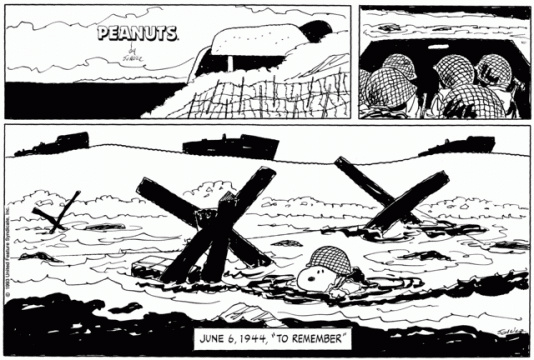
On this day seventy years ago, the greatest military invasion took place - as Allied Forces landed in Normandy, France to begin the liberation of Europe from Germany in World War II.  The day before, on June 5, General Dwight D. Eisenhower gave the go-ahead for Operation Overlord, putting 6,000 ships and more than 176,000 troops into the English Channel for the crossing to designated landing areas on the French coast.  More than 12,000 aircraft were used to ferry parachute troops into France and provide air cover.  As the sun rose over the beaches the land invasions began and by the end of the day - 18,000 parachutists were on the ground and more than 155,000 soldiers had taken Normandy's beaches.

Part of my job responsibilities is to respond to reference requests for military service records.  Unfortunately, the requests for World War II records is dwindling, at least from the "I served in World War II" perspective.  We do get a lot of "my father / grandfather / uncle," etc., served "but he didn't like to talk about it" requests.  One really only has to take a look at the opening of this movie to understand why.

Congratulations (and a huge Thank You) to all of those brave men who fought on this day and those who gave the "last full measure" seventy years ago.

Wednesday, May 14, 2014

Westward Ho!

Two hundred and ten years ago today - at the request of President Thomas Jefferson, Meriwether Lewis and William Clark set out from St. Louis to explore the Northwest from the Mississippi to the Pacific Ocean.  Less than six months earlier the United States finalized the Louisiana Purchase.  After setting out, Lewis and Clark were joined by Sacagawea and in November 1805, they arrived at the Pacific - the first European explorers to reach the Pacific by an overland route from the east.


Friday, January 24, 2014

Who is the Most Significant Person of All Time?

Statistically speaking, of course.  Two individuals set out to quantify the contributions of prominent individuals and come up with a list of the most significant people in the world.  From the Atlantic.  Thoughts?  Comment away.
  1. Jesus
  2. Napoleon
  3. Mohammed
  4. William Shakespeare
  5. Abraham Lincoln
  6. George Washington
  7. Adolf Hitler
  8. Aristotle
  9. Alexander the Great
  10. Thomas Jefferson
  11. Henry VIII
  12. Charles Darwin
  13. Elizabeth I
  14. Karl Marx
  15. Julius Caesar 
  16. Queen Victoria
  17. Martin Luther
  18. Joseph Stalin 
  19. Albert Einstein 
  20. Christopher Columbus
So we have four religious leaders (Jesus, Mohammed, Martin Luther, and Henry VIII), two of them in the top 5.  Protestants just can't get a break.  There is a part of me that feels that Johannes Gutenberg needs to be on this list, because without him, numbers 4 and 10 (and for that matter #17) don't have an outlet for their work. 

I would like to see how they calculated their results to have Napoleon come in at number 2.  I guess it's plausible, seeing as what he accomplished (or didn't accomplish) made number 7 and number 18 possible.  But one could also make the case that Alexander the Great begat Julius Caesar who begat Napoleon.

It's interesting the sciences are so "underrepresented," with only Darwin and Einstein on the list.  Leonardo DaVinci, anyone? Copernicus? And it's nice (for those of us living here in the Americas) for Columbus on the list, but there are other explorers out there that one could say had a greater impact on navigation and exploration.

Can you tell I have some issues with this list?

Friday, November 22, 2013

Reflection on a Dark Day

This morning LBA asked me about the significance of the 50th Anniversary of the assassination of John F. Kennedy.  My first answer was that the killing of an American President had not happened since William McKinley in 1901 (obviously Warren Harding and Franklin Roosevelt had died in office but not at the hands of a killer).  LBA knows about Tecumseh's Curse and he asked about that, too.  My follow up response was that JFK was so young and full of "vigah" - plus he was the first Catholic President as well.  The assassination also played out on national television, bringing a nation (and the world) to a standstill for the weekend.

Most of the reports that you hear often start with, "People who were alive in 1963 can always remember exactly where they were when they heard the news."  For an entire generation of Americans, the day's events are seared in their collective memories.

My mother told me her story many times.  She was bowling in a women's league, while my brother was home sick.  He called the bowling alley to tell my mother what had happened.  She immediately asked for the news to be announced over the bowling alley's PA system.  Everyone in the alley stopped bowling and went home to learn more.  The rest of the weekend was spent watching the news on television.  Of course, in 1963, there were no cable news channels, and only a few TV channels at that.  She always told me of watching Walter Cronkite deliver the news in his shirtsleeves - then as the afternoon turned to evening, he suddenly realized he was not wearing a suit jacket.  Later, when Cronkite returned to the air, he had put on his suit jacket.


There are any number of stories about this seminal event in American History.  Of course, there are the conspiracy theories as well, and there have been a number of "alternate histories" of what could have happened had JFK lived. Where I work, there are countless records about the JFK assassination and I have worked with researchers here and in a previous archives job who were looking into the story of the day's events.

As a "history geek," I can tell you with ease where I was when other significant events took place in history though I was not alive when JFK was killed.  The death of JFK was most certainly a defining moment in history and it brought a generation together not seen again, in my opinion, until the September 11 attacks nearly forty years later.

Tuesday, November 19, 2013

Seven Score and Ten Years Ago Today

Four score and seven years ago our fathers brought forth on this continent, a new nation, conceived in Liberty, and dedicated to the proposition that all men are created equal. 

Now we are engaged in a great civil war, testing whether that nation, or any nation so conceived and so dedicated, can long endure. We are met on a great battle-field of that war. We have come to dedicate a portion of that field, as a final resting place for those who here gave their lives that that nation might live. It is altogether fitting and proper that we should do this. 

But, in a larger sense, we can not dedicate -- we can not consecrate -- we can not hallow -- this ground. The brave men, living and dead, who struggled here, have consecrated it, far above our poor power to add or detract. The world will little note, nor long remember what we say here, but it can never forget what they did here. It is for us the living, rather, to be dedicated here to the unfinished work which they who fought here have thus far so nobly advanced. It is rather for us to be here dedicated to the great task remaining before us -- that from these honored dead we take increased devotion to that cause for which they gave the last full measure of devotion -- that we here highly resolve that these dead shall not have died in vain -- that this nation, under God, shall have a new birth of freedom -- and that government of the people, by the people, for the people, shall not perish from the earth.

Abraham Lincoln 
November 19, 1863

Friday, November 15, 2013

101 Objects That Made America

Last week was the Fall 2013 MARAC Meeting in Philadelphia.  Many of my colleagues (including Mrs. BA) work at the Smithsonian, which has just come out with a list of items in their holdings that tell the American Story.

See what you think.  Items 2-10 are grouped under "Wild America," items 11-20 are listed as "Discovery," 21-34 in "Voice," 35-48 under "Power," next is "Invention" for items 49-60, followed by "Community" for items 61-70, then items 71-79 are under "Happiness," then "America in the World" for items 80-91, and finally "Freedom" for items 91-101.
  1. The Star-Spangled Banner
  2. The American Buffalo
  3. The Duck Decoy 
  4. The Bald Eagle
  5. Coast Redwood
  6. Stegosaurus
  7. Audubon Plate
  8. Passenger Pigeon
  9. Life Preserver (from a Westward Exploration journey)
  10. Bierstadt Painting
  11. Neil Armstrong's Space Suit (didn't he just die?)
  12. Lewis and Clark's Compass 
  13. Gold Nugget 
  14. Polio Vaccine 
  15. Dark Matter Spectrograph 
  16. Scopes Trial Photograph 
  17. Benjamin Franklin's Experiments 
  18. Burgess Shale 
  19. George Catlin Paintings
  20. [James] Smithson's Will 
  21. Walt Whitman Photograph
  22. Bell's Telephone
  23. Remington Typewriter
  24. Marian Anderson's Fur Coat
  25. FDR's Microphone 
  26. Nat Turner's Bible
  27. Langston Hughes' 'The Colored Soldier'
  28. Middle Mississippian Mask 
  29. Chavez's Jacket
  30. Andy Warhol's Michael Jackson 
  31. Louis Armstrong's Trumpet
  32. Nam June Paik's Electronic Superhighway 
  33. Justice O'Connor's Robe 
  34. Telstar
  35. Lincoln's Top Hat
  36. Appomattox Table and Chairs 
  37. Gordon Photograph (a runaway slave, whose picture showed the multiple scars of many lashes)
  38. George Washington: The Lansdowne Portrait 
  39. Susan B. Anthony's Gavel 
  40. Red Horse's Drawings of Little Bighorn 
  41. Greensboro Lunch Counter 
  42. Predator Drone 
  43. Bell UH-1H Iroquois Helicopter
  44. Enola Gay 
  45. Wright Flyer
  46. Wonder Woman Comic 
  47. Colt Revolver 
  48. White House Timber
  49. Clovis Points 
  50. Singer Sewing Machine 
  51. Cotton Gin 
  52. Levi's Jeans 
  53. Eames Chair 
  54. Eniac computer 
  55. Edison Light Bulb 
  56. Kodak Camera 
  57. Morse Telegraph 
  58. John Bull Locomotive 
  59. Model T
  60. Space Shuttle Discovery
  61. Ration Ticket 
  62. Pueblo Jars 
  63. "This Land Is Your Land
  64. Suitcase From Japanese Internment 
  65. AIDS Quilt 
  66. Emergency Money
  67. John Deere Plow 
  68. Stagecoach 
  69. Negro League Baseball 
  70. Psychedelic Signboard 
  71. Barbie
  72. Chuck Berry's Guitar 
  73. Irving Berlin's Piano
  74. R2-D2 
  75. Ruby Slippers 
  76. Teddy Bear 
  77. Ali's Gloves and Robe 
  78. Jordan's Jersey 
  79. Richard Petty's Stock Car 
  80. Spirit of St. Louis
  81. Novus Orbis Map
  82. "M*A*S*H" Sign
  83. Fallout Shelter
  84. World Trade Center Sign
  85. Gas Mask (from World War I)
  86. Pocahontas Engravings 
  87. Giant Panda
  88. U.S. Olympic Hockey Jersey 
  89. Vintage California Wines 
  90. USS Maine Bugle (blown up in Havana harbor, sparking the Spanish-American War)
  91. USS Oklahoma Stamp (sunk in the Japanese attack on Pearl Harbor)
  92. Stained Glass Shards (from the church in Birmingham Alabama)
  93. Geronimo
  94. John Brown Daguerreotype 
  95. LBJ's Pen
  96. Thomas Jefferson's Desk 
  97. Piece of Plymouth Rock
  98. Harriet Tubman's Hymn book 
  99. "Clipper Flying Cloud
  100. Stamp Act Proof
  101. The Pill

Sunday, September 1, 2013

Thirty Years Later


On September 1, 1983, Korean Airlines Flight 007 disappeared from radar after passing over Soviet territory as it approached its final destination.  Soviet fighter pilots had intercepted the plane and tried to make contact with the plane.  Receiving no response, one of the pilots fired a heat seeking missile, downing the plane, killing 269 passengers and crew.


Shortly after this tragedy, I was on a plane myself returning home from a trip to France.  It was a little troubling to pick up the issue of Time Magazine above in the Paris airport and then get on a plane to fly home.


Saturday, July 20, 2013

The Bretton Woods Conference

Sixty-nine years ago this month in July 1944, the Bretton Woods Conference convened at the Bretton Woods Hotel in New Hampshire.  Arriving in secrecy at the hotel were delegates from around the world, there to help establish an international financial system to help the world recover from the Second World War.  The link above is to a virtual exhibition that I helped to create when I worked at the International Monetary Fund.

There's a new book out on the work of the conference and the individual efforts of Harry Dexter White, the chief U.S. representative.  The book also sheds some new light on allegations that White may have been a Soviet spy.  The book is an excellent companion piece to the 2010 Pulitzer Prize Winning Lords of Finance.  There was also a recent article about White's alleged spying that appeared in Foreign Affairs.  When I worked at the IMF, I had the honor of spending some time with Jacques Polak, who was also a representative at the conference.  He told some amazing stories about the workings of the conference.

We've come a long way from those days in New Hampshire (and later in Savannah). The Brave Astronaut has a good friend who is coming out with a book in September on financial warfare.  I'm looking forward to reading it - you should too!

Sunday, July 14, 2013

The Bells of Notre Dame

Today is Bastille Day - the day that marks the beginning of the French Revolution and the storming of the prison in Paris.  Earlier this year, in March, I spotted this about new bells being placed in the steeples of Notre Dame.  The cathedral marked its 850th Anniversary on March 23

The summer of 2013 is also the thirtieth (30 years!?) anniversary of my trip to France.  All of my siblings and I were given the opportunity by our parents to spend the majority of a summer in France, visiting with relatives in France.  (My father was born in France - on July 4, which of course didn't matter until he came here and there are still many Brave Astronaut relatives there.) In fact, as the BuzzFeed article notes, the bells were forged in Normandy, the neighboring province to where several of my family's relatives live - on the southern coast of Bretagne."

So, coming up - to commemorate my trip to France - I will post some recollections of my trip to France.  For now, won't you sing along with me?  (I'll have to check in with my father - if he's drinking today, he might break into song, as he is wont to do when he's had a few.)