Showing posts with label On this Date. Show all posts

Thursday, July 20, 2017

No Selfies Here, yet

Today is the anniversary of the Apollo 11 Moon Landing.  Earlier this year, NASA launched (see what I did there?) a new database of images.  From the press release, "The NASA Image and Video Library website consolidates imagery spread across more than 60 collections into one searchable location."

You can access the images here.  Here is an image I downloaded from the database, showing Neil Armstrong coming down the ladder of the LEM.


And another of the Earth taken from the spacecraft.


In this year, the centennial of the birth of John F. Kennedy, the Brave Astronaut shares with you, the 1962 speech in which the President laid out the plans to go to the moon.


Wednesday, July 20, 2016

Space: The Final Frontier

Today is the anniversary of the Apollo Moon Landing, July 20, 1969.  As of today (and for the foreseeable future, it would seem), there have only been 12 men who have walked on the moon.  They are part of a group of individuals who have been in space.  Anyone want to hazard a guess as to how many people that is?

536
(as of November 2013, from Wikipedia)

So on this anniversary, here is a list of those "Brave Astronauts" who journeyed to the moon.  Of that number, only seven are still alive. (originally from kottke)
  1. Neil Armstrong, 1930-2012
  2. Buzz Aldrin, b. 1930
  3. Pete Conrad, 1930-1999
  4. Alan Bean, b. 1932
  5. Alan Shepard, 1923-1998
  6. Edgar Mitchell, 1930-2016
  7. David Scott, b. 1932
  8. James Irwin, 1930-1991
  9. John W. Young, b. 1930
  10. Charles Duke, b. 1935
  11. Eugene Cernan, b. 1934
  12. Harrison Schmitt, b. 1935
Here's a video mashup of space movies, for your entertainment (Luc Bergeron's Space Story, via kottke)

Thursday, June 30, 2016

Wait, How Old Were They?

We have arrived at the final post for the Signers of the Declaration of Independence.  Next week we will celebrate the independence of our nation - and of course, there will be the traditional viewing of 1776, but please take a moment to peruse the list below - noting the ages of the "Founding Fathers" and other prominent personalities of the age on July 4, 1776 [from the Journal of the American Revolution, via kottke].
  1. Andrew Jackson, 9
  2. (Major) Thomas Young, 12
  3. Deborah Sampson, 15 
  4. James Armistead, 15 
  5. Sybil Ludington, 15 
  6. Joseph Plumb Martin, 15 
  7. Peter Salem, 16* 
  8. Peggy Shippen, 16 
  9. Marquis de Lafayette, 18 
  10. James Monroe, 18 
  11. Charles Pinckney, 18 
  12. Henry Lee III, 20 
  13. Gilbert Stuart, 20 
  14. John Trumbull, 20 
  15. Aaron Burr, 20 
  16. John Marshall, 20 
  17. Nathan Hale, 21
  18. Banastre Tarleton, 21 
  19. Alexander Hamilton, 21* 
  20. John Laurens, 21 
  21. Benjamin Tallmadge, 22 
  22. Robert Townsend, 22 
  23. George Rodgers Clark, 23 
  24. David Humphreys, 23 
  25. Gouveneur Morris, 24 
  26. Betsy Ross, 24 
  27. William Washington, 24 
  28. James Madison, 25 
  29. Henry Knox, 25 
  30. John Andre, 26 
  31. Thomas Lynch, Jr., 26^ 
  32. Edward Rutledge, 26^ 
  33. Abraham Woodhull, 26 
  34. Isaiah Thomas, 27 
  35. George Walton, 27*^ 
  36. John Paul Jones, 28 
  37. Bernardo de Galvez, 29 
  38. Thomas Heyward, Jr., 29^ 
  39. Robert R. Livingston, 29 
  40. John Jay, 30 
  41. Tadeusz Kosciuszko, 30 
  42. Benjamin Rush, 30^ 
  43. Abigail Adams, 31 
  44. John Barry, 31 
  45. Elbridge Gerry, 31^ 
  46. Casimir Pulaski, 31 
  47. Anthony Wayne, 31 
  48. Joseph Brant, 33 
  49. Nathanael Greene, 33 
  50. Thomas Jefferson, 33^ 
  51. Thomas Stone, 33*^ 
  52. William Hooper, 34^ 
  53. Arthur Middleton, 34^ 
  54. James Wilson, 34*^ 
  55. Benedict Arnold, 35
  56. Samuel Chase, 35^ 
  57. Thomas Knowlton, 35 
  58. William Paca, 35^ 
  59. John Penn, 35^ 
  60. Hercules Mulligan, 36 
  61. Andrew Pickens, 36 
  62. Haym Solomon, 36 
  63. John Sullivan, 36 
  64. George Clymer, 37^ 
  65. Charles Cornwallis, 37 
  66. Thomas Nelson, Jr., 37^ 
  67. Ethan Allen, 38 
  68. Charles Carroll, 38^ 
  69. King George III, 38 
  70. Francis Hopkinson, 38^ 
  71. Carter Braxton, 39^ 
  72. George Clinton, 39 
  73. John Hancock, 39^ 
  74. Daniel Morgan, 39 
  75. Thomas Paine, 39 
  76. Patrick Henry, 40 
  77. Enoch Poor, 40 
  78. John Adams, 40^ 
  79. Daniel Boone, 41 
  80. William Floyd, 41^ 
  81. Button Gwinnett, 41*^ 
  82. John Lamb, 41* 
  83. Francis Lightfoot Lee, 41^
  84. Paul Revere, 41 
  85. Thomas Sumter, 41 
  86. Robert Morris, 42^ 
  87. Thomas McKean, 42^ 
  88. George Read, 42^ 
  89. John Dickinson, 43 
  90. John Glover, 43 
  91. Benjamin Edes, 43 
  92. Samuel Huntington, 44^ 
  93. Richard Henry Lee, 44^ 
  94. Charles Lee, 44 
  95. Francis Marion, 44 
  96. Lord North, 44 
  97. George Washington, 44 
  98. Joseph Galloway, 45 
  99. Robert Treat Paine, 45^ 
  100. Friedrich von Steuben, 45 
  101. Richard Stockton, 45^ 
  102. Martha Washington, 45 
  103. William Williams, 45^ 
  104. (Dr.) Thomas Young, 45* 
  105. Josiah Bartlett, 46^ 
  106. Henry Clinton, 46 
  107. Joseph Hewes, 46^ 
  108. William Howe, 46 
  109. George Ross, 46^ 
  110. William Whipple, 46^ 
  111. Caesar Rodney, 47^ 
  112. John Stark, 47 
  113. Mercy Otis Warren, 47 
  114. William Ellery, 48^ 
  115. Horatio Gates, 48 
  116. Artemas Ward, 48 
  117. Oliver Wolcott, 49^ 
  118. Abraham Clark, 50^ 
  119. Benjamin Harrison, 50^ 
  120. George Mason, 50 
  121. Lewis Morris, 50^ 
  122. Lord Stirling, 50 
  123. George Wythe, 50*^ 
  124. Guy Carleton, 51 
  125. John Morton, 51*^ 
  126. Comte de Rochambeau, 51
  127. Lyman Hall, 52^ 
  128. James Rivington, 52* 
  129. Samuel Adams, 53^ 
  130. Comte de Grasse, 53 
  131. John Witherspoon, 53^ 
  132. John Burgoyne, 54 
  133. Johann de Kalb, 55
  134. Roger Sherman, 55^ 
  135. Thomas Gage, 56 
  136. James Smith, 56^ 
  137. Israel Putnam, 58 
  138. Comte de Vergennes, 58 
  139. Lewis Nicola, 59* 
  140. George Germain, 60 
  141. Philip Livingston, 60^ 
  142. George Taylor, 60*^ 
  143. Matthew Thornton, 62^ 
  144. Francis Lewis, 63^ 
  145. John Hart, 65*^ 
  146. Stephen Hopkins, 69^ 
  147. Benjamin Franklin, 70^ 
  148. Samuel Whittemore, 81
*  Evidence may exist that this age is not precise, or only a birth year is known
^  Signers of the Declaration of Independence (average signer age was 44)

Monday, February 29, 2016

The Leap Year Cocktail

Who knew?  There is actually a cocktail that was allegedly invented on February 29, 1928.  It calls for gin - so it may not be for me - but by all means, have at it (via Slate)

The Leap Year Cocktail 
Yield: 1 serving
Time: A couple to 3 minutes
  • 2 ounces gin
  • ½ ounce Grand Marnier
  • Scant ½ ounce sweet vermouth 
  • Generous ½ ounce lemon juice 
  • Lemon twist for garnish 
Shake the gin, Grand Marnier, vermouth, and lemon juice with ice and strain into a chilled cocktail glass. Garnish with the lemon twist.

Thursday, February 25, 2016

10 Years Gone


Ten years ago, at about this time of the morning, I received a call from my sister that my mother was gone.  It was not unexpected, she had been sick for a while and my siblings and I had all been home the previous weekend to say goodbye.  It didn't make it any easier, it never is, but we knew that at last, she was free of pain.

My mother firmly believed that God had a eternal datebook and that each day he opens it and there is a list of names on the page.  And if you're name is on it - then it's your time.  She used to say that when you would hear stories about people surviving plane crashes because they missed the flight or someone was taken too soon.  My mother had a good, long life and she got to meet LBA (seen above with her in 2005), but did not get to meet SoBA.

Social Media was just starting out when my mother was declining - and I used to get these "instant messages" from her that were laid out like email.  She was getting the hang of it and I say very often that she would have LOVED Facebook.  Not so much Twitter, though - my mother could never keep it to 140 characters.

My siblings and I have all faced challenges in these past 10 years and we've had a lot of great things in our lives, too.  Just the other day someone commented on Facebook that they had heard something that they wanted to call their mother and share with her - then realized she wasn't there anymore.  I feel that way a lot.

My mother also liked to say that in heaven you get to be whatever age you want and that you get to meet with whomever you like.  So I know that once she got there, after she reconnected with her family, she has dinner parties every night and all her favorites are there to hang out with her.  Frank Sinatra, Paul Newman came in 2008, Andy Williams stopped by in 2012.  I bet she hangs out with Juliette Gordon Low and Lady Baden-Powell a fair bit of the time as well.  I am sure that she was there to greet Bob when he left us too soon last September.

In her downtime (if she has any), I know that she is looking after all of us and that she is never ever completely gone from us.  I see a lot of her in SoBA (it's the gregarious personality and the non-stop conversational style), so that even though she didn't get to meet him - it's like she's always close by.

I love you Mom. 


Friday, August 7, 2015

The United Nations Takes a Step Forward

On this day in History, President Harry Truman signed the United Nations Charter, and the United States became the first nation to complete the process of joining the new international organization - which will celebrate its 70th anniversary in October.

There are currently 193 nations in the United Nations.  I had an idea that I was going to do a series of posts this year to commemorate the founding of the UN, but couldn't get it together.  How could I adequately highlight all of the countries?

I used to visit the UN Headquarters often while growing up in New York.  If you're in New York, it is absolutely worth a visit.

To mark this significant anniversary, here are 15 Crazy Facts About Some of the World's Lesser Known Countries. From BuzzFeed.
  1. Kiribati (UN Member since 1999) is the world’s only country to fall within all four hemispheres.
  2. The island nation of Niue (not a member of the UN) has coins featuring Disney characters, Star Wars characters, and more. Located in the middle of the Pacific Ocean and with only about 1,200 residents, the small island nation of Niue is one of the most remote in the world.
  3. Ethiopia (Original Member - 1945) still follows a traditional calendar that is seven years behind the rest of the world. Because of the strong presence of the Coptic Orthodox Church in the country, the traditional calendar of that church is still influential in Ethiopia. The calendar came about in the 16th century when most of Christianity changed the date Jesus is believed to have been born on, but those in Ethiopia decided to maintain the original date. 
  4. Greenland (an autonomous country within Denmark) is unable to join FIFA because the ground there can’t grow a grass field. Because of the country’s climate, the ground is generally covered in ice or permafrost, making it nearly impossible to grow enough grass to form a regulation-size soccer field. 
  5. The country of Nauru (member since 1999) does not have a capital city.
  6. Nauru also holds the distinction of being the fattest nation in the world. Due to the popularity of Western-style fast food that was brought to the country following the island’s financial success in phosphate mining, the average citizen of Nauru has a BMI of between 34 and 35. For reference, a normal BMI is between 18.5 and 24.9.
  7. Tuvalu (member since 2000) received $50 million in exchange for the rights to the nation’s lucrative internet domain, .tv. 
  8. The most isolated tree in the world was located in the middle of the Sahara Desert in Niger (member since 1960). Known as the Tree of Ténéré (or L’Arbre du Ténéré to locals, as Niger’s official language is French), this small acacia tree was separated from any other trees by a distance of 250 miles. 
  9. One of the islands in the Federated States of Micronesia (UN member since 1991)uses giant carved stones as a form of currency. The country is made up of numerous islands spread across the Pacific Ocean, including the island state of Yap. And on Yap, instead of paper currency, the traditional form of money has been giant limestone discs (rai stones), which are considered rare and important because the limestone originated on another island far away. Of course, the sheer size of these stones makes it difficult for them to actually be moved, so most times, payment with the stones is simply based on oral agreement rather than any physical exchange. 
  10. There are 23 native languages recognized by the government in Guatemala (Original UN Member - 1945). Overall, about 40% of the population speaks one of these languages, including Quiche, Kekchi, and Mam.
  11. In 1973, Bhutan (UN Member since 1971) instituted a policy to measure the nation’s Gross National Happiness (as opposed to the more typical Gross Domestic Product). 
  12. A 2007-2008 Gallup poll found Estonia (UN Member since 1991) to be the least religious country in the world. The poll asked respondents from around the world, “Is religion an important part of your daily life?” Only 14% of Estonians answered in the affirmative, the lowest of all nations. In contrast, in that same poll, Egypt had a 100% “yes” rate.
  13. San Marino (UN Member since 1992) has the highest amount of automobiles per people in the world. A 2010 study found that the tiny nation of San Marino, which is located entirety within Italy, had 1,139.06 cars per 1,000 people the only nation in the study, in fact, that had more cars than citizens.
  14. Papua New Guinea (UN Member since 1975), with only 6.5 million residents, contains about 12% of the world’s spoken languages. Although most are spoken by fewer than 1,000 people, there are more than 800 indigenous languages used in Papua New Guinea.
  15. Liechtenstein (UN Member since 1990) is the world’s largest producer of false teeth. Even with just under 40,000 residents, the Principality of Liechtenstein is a major powerhouse when it comes to the production of false teeth. In 2010, it was manufacturing about 60 million false teeth, which was one-fifth of the total amount of false teeth produced worldwide.

Friday, July 17, 2015

Have a Magical Day!

On this date sixty years ago, Disneyland opened.  At the time of the opening, the park sat on 160 acres of former orange groves in Anaheim, California, and cost $17 million dollars to build.

Now that the Brave Astronaut clan is getting ready to take an honest to goodness vacation - coming soon! - Mrs. BA and I are thinking about a trip to warmer climes, specifically Florida.  Now Walt Disney World is an obvious destination - but neither Mrs. BA nor I are big fans of the Mouse.

Several years ago, we both attended a professional meeting "on campus" at the Dolphin Hotel.  Every time you got someone from the front desk on the phone, they closed the conversation with "Have a Magical Day." 

Going to Disney World would be fun and both LBA and SoBA would have a ball - though all I would really want to do is go to the Hall of Presidents.  And it requires the economy of a small country to take the family there.  One-day tickets start at $100 each!

If / When we go to Florida, we are more likely to head to Legoland.  That's just fun for everyone!

Saturday, June 20, 2015

SHARK! SHARK!


It has been forty years since the release of the above movie, the one that kept me out of Long Island waters for most of the summer of 1975.  Go ahead, hit play above and read this list (from CNN) about the first, real summer blockbuster.
  1. Stephen Spielberg, whose first film, "Duel," was about a highway motorist being menaced by a mysterious tanker truck, was afraid of being typecast if he took the "Jaws" job. "Who wants to be known as a shark-and-truck director?" he complained. 
  2. None of the three main actors - Roy Scheider, Robert Shaw and Richard Dreyfuss - was the producers' first choice for the parts. Robert Duvall and Charlton Heston were among those considered for Chief Brody, while Lee Marvin and Sterling Hayden were initially sought for Captain Quint, and Jeff Bridges was discussed for Matt Hooper, the marine biologist. 
  3. The movie's script eliminated several subplots from Peter Benchley's novel that Spielberg considered distracting, including an affair between Chief Brody's wife, Ellen, and Hooper (Dreyfuss). 
  4. Location scouts considered filming locales across the United States but chose Martha's Vineyard because they needed a summer beach resort town with a sheltered bay, manageable tides and shallow waters to make filming easier.
  5. Although the movie is set in midsummer, producers began filming in early May 1974 to avoid an actors' strike that was scheduled to begin July 1. If you look closely in the background of some scenes, you can see trees with no leaves. 
  6. The movie's 25-foot great white shark was played by three full-scale mechanical models towed by submerged "sleds" or guided by hidden scuba divers. The crew nicknamed the shark "Bruce" after Spielberg's lawyer, Bruce Ramer. 
  7. Spielberg, frustrated by the shark's frequent malfunctions, had another name for it: "the great white turd." The movie triggered a wave of interest in great white sharks and other predatory sea creatures. The Discovery Channel's long-running "Shark Week" has spawned such DVD titles as "Ocean of Fear" and "Fins Of Fury." 
  8. British actor Robert Shaw was so concerned about owing taxes to the IRS on his income that he flew to Bermuda or Canada on almost all his days off to limit his work hours in the United States. 
  9. The grieving mother who slapped Chief Brody in the movie was played by actress Lee Fierro. She had a difficult time faking the slap and instead walloped Scheider over and over during the many takes needed to get the scene right. 
  10. At one point, Quint's boat, the Orca, sank unexpectedly during filming, soaking cameras and threatening to ruin the day's completed footage. The waterlogged film was flown to a lab in New York, where technicians were able to save it. 
  11. When composer John Williams first played his ominous two-note "shark theme" score for Spielberg on a piano, the director thought it was a joke. Later Spielberg would say, "The score was clearly responsible for half of the success of that movie." 
  12. Local fishermen were unable to catch a big enough shark to use in the scene in which town officials prematurely celebrate a large shark that's been caught and strung up on a dock. So the film's producers located a freshly caught 13-foot tiger shark in Florida and flew it up to Massachusetts on a private plane. By the time the cameras rolled, however, the shark was decomposing and smelled awful. 
  13. The movie's protracted shoot was so troubled by mishaps that some crew members privately began calling the film "Flaws." 
  14. Brody's famous line upon first encountering the shark, "We're gonna need a bigger boat," was ad-libbed by Scheider. At test screenings, the audience's screams drowned out the line, so Spielberg re-edited the scene to make it more audible.
  15. A young filmmaker named John Landis was visiting the set when he was pressed into duty to help build the rickety wooden pier used in the scene where two men try to catch the shark with a hook and chain, baited with a roast. Landis went on to direct "Animal House" and "An American Werewolf in London." 
  16. For the famous scene in which Quint recounts the sinking of the USS Indianapolis, Shaw persuaded Spielberg to let him have a few drinks before the cameras started rolling. But Shaw got so drunk, he had to be carried to the set and couldn't get through his lines. He later called Spielberg and apologized; they shot the scene again the next day, and Shaw nailed it. 
  17. To add authenticity to the scene in which Hooper goes underwater in the shark cage, a second unit shot footage of real sharks in Australia. To make the sharks appear bigger, the filmmakers used a shrunken shark cage and a Hooper stunt double played by a 4-foot-9 ex-jockey in a wetsuit. 
  18. The original script, like the novel, called for Hooper to be killed when the shark bites through the cage. But the Australia crew had captured spectacular footage of a great white attacking an empty shark cage, and Spielberg wanted to use it. So the scene was rewritten to let Hooper escape, sparing Dreyfuss' character. 
  19. After principal filming wrapped, Spielberg decided he needed one more big scare. He wasn't satisfied with the scene in which Hooper investigates a fisherman's sunken boat and is jolted when the man's disembodied head floats out of the hull. So Spielberg recruited a small crew and reshot the scene in film editor Verna Fields' backyard swimming pool in Encino, California. To make the clear, chlorinated water match the murkier look of the ocean, crew members poured a gallon of milk into the pool. 
  20. Test screenings revealed that the audience's loudest screams were for the severed-head scene -- even louder than when the shark first rises out of the water behind Brody. After the movie opened, Spielberg and screenwriter Gottlieb would sneak into screenings in Los Angeles and stand in the back of the theater "just to watch the sold-out audience visibly rise out of their seats with a collective shriek." 
  21. John Williams conducted the orchestra during the 1976 Academy Awards, so when he won the Oscar for best score, he had to dash up to the podium to accept his Oscar and then run back down to continue conducting.

Thursday, December 25, 2014

The 12 Posts of Christmas (2014 edition) #9

Today, in addition to being Christmas Day, it is also LBA's birthday - today he reaches double digits!  We will celebrate in our usual way, with Christmas in the morning and birthday festivities in the evening.

Of course, LBA shares his birthday with another more famous individual.  However, there is no exact documentation for the exact date of the birth of Jesus Christ, though it was believed to have been in the year 6 BC.  Over the first two centuries, few claimed to know that exact day or year of Christ's birth.  In AD 336, the Church of Rome held a festival of Christ's Nativity, according to a Roman almanac, the first indication of celebrating December 25 as Christmas.

Many researchers believe the date was chosen as a Christian substitute for pagan celebrations of the winter solstice (we, of course, also adopted the pagan use of trees for decorating).  When Constantine I converted to Christianity in AD 312, the day of Christmas became fixed on December 25, appropriating the winter solstice celebrations.

Merry Christmas to all and Happy Birthday to my little buddy, LBA!

Saturday, December 6, 2014

555 Feet High

On this day in 1884, the Washington Monument in Washington, DC was completed as a nine-inch aluminum pyramid was placed atop the marble obelisk.  As early as 1783, the US Congress decided there should be a permanent monument to General Washington.  The idea lagged until 1848, when the cornerstone, a 24,500-pound block of white marble, for the monument was laid.  Construction was halted six years later and the monument remained half-built through the Civil War, until 1876, the centennial of America Independence, when President Grant authorized the monument finished.  When completed, the monument was the tallest structure in the world.

On August 23, 2011, the monument, and the entire city, was hit by an earthquake, which significantly damaged the monument.  For much of 2012 the monument was shrouded in scaffolding as repairs were made to the monument.  You can read a lot of information about the damage, repair, and restoration of the monument, and also see a number of videos, including security camera footage from the day of the quake at the National Park Site.

Through a $7.5 million donation from David Rubenstein, the monument was repaired and reopened earlier this year.

Sunday, September 21, 2014

The most prolific and king of horror - Stephen King

Today marks the 67th birthday of the King of Horror, Stephen King.  I have long been a fan of the Maineac author - having read my first King novel, Salem's Lot, while on vacation in Maine.  Needless to say, I did not sleep well that week.

According to BuzzFeed in identifying the "11 Essential Stephen King books, notes that  "Stephen King is one of the most prolific authors in the world, with more than 50 books in print, and more coming out every year . . . So many people criticize King, without even realizing that they enjoyed movies that were written by him: Shawshank Redemption, The Green Mile, and Stand By Me, for example . . . Good luck, and happy reading." (My comments in italics)
  1. The Stand -  For me, the writing of Stephen King starts and ends with The Stand. It is an epic, post-apocalyptic horror story that begins with “Captain Trips,” a deadly virus, and ends with a massive showdown, good vs. evil — the last stand. I can still remember the opening scene, the family running from the medical facility, crashing into a gas station, miles away — handing the story to the immune Stu Redman. It’s a big book, the uncut version clocking in at 1,100 pages, but it needs to be this big. We have so many storylines to follow, people to root for, and miles to cover, crossing the United States, one horrific moment after another. We root for Mother Abigail, the spiritual leader; Larry Underwood, the rock star; Nick Andros, a deaf man from the Midwest; and Frannie Goldsmith, a teenager. We meet the “Trashcan Man” and of course, the dark spirit, Randall Flagg. While people often list The Stand, The Shining, or It as his best work, if I had to pick one as my favorite, it has to be The Stand. This story is a rollercoaster ride of tension and hope, a beautiful narrative that left me in tears. I tend to keep books around and while I have excessed some of the King books out of my library - this one is and will always be on my shelf.
  2. The Shining - Due to the famous film by Stanley Kubrick, and the performance of Jack Nicholson, this may be King’s most well-known book. I recently re-read it for the first time in 30 years and it still holds up. And the ending, the father-son story — I can see why King hated Kubrick’s version; it lacked so much heart. Where The Stand holds tension over 1,100 pages, The Shining is an exploration of one man, Jack Torrance, falling apart, losing his mind to the Overlook Hotel, and the abuse and suffering that his family endures. I wondered, when I re-read this, if it would still scare me — and you know what, it did! And the same places, too — those damn hedge animals. This is really a classic King title, and one that puts the vulnerable Danny Torrance (REDRUM! REDRUM!) front and center, while also flipping back and forth between the quickly eroding mind of Jack, and the worrisome, helpless mother, Wendy. This is an iconic book, another essential King read.  I have seen the movie, but can't confirm that I have read the book.
  3. It - Another massive book, also over 1,100 pages, It is another favorite King book of mine. It introduces us to the horror that lurks in the sewers of Derry, Maine, and a creepy clown known as Pennywise. We follow a cast of misfits, “The Losers Club,” first as children, and then later, as adults. What’s the line? “We all float down here.” Not only does King build on the vulnerability of a handful of kids trying to fight and defeat a terrible presence after the disappearance and eventual death of Georgie Denbrough, but King makes them come back to face the evil as adults. There has always been some controversy over the “bonding scene” between Beverly and the boys, with many fans saying it put them off the book altogether, but I never saw it that way — more like soldiers surviving a war, a blood oath and bond that could never be severed. It’s dark for sure, though.  I have read the book and have seen the movie and fully commiserate with those who hate clowns.
  4. The Dead Zone - I think what draws me to this book over many other King titles is the noble, but complicated, cause of Johnny Smith. Imagine if you were this man, or if you knew him, and he said that certain events were going to transpire? That the president, or some other politician, was going to cause the end of the world through his selfish acts? You’d say he was crazy, right? So we root for Johnny, because we know he’s telling the truth, we know the obstacles he’s up against, and we want to see him win. And of course anything involving luck, the occult, or any sort of supernatural powers is always a fascinating read. We feel for Johnny when his fiancée moves on; we see the sad, sordid life he’s living, and we feel sympathy, empathy. And in the end, he is the hero, and we’re one of the few who know about his secret. And that’s part of King’s appeal, sometimes, that he lets us peek behind the curtain, lets us know about what dark magic is happening in the shadows. It’s also one hell of a good movie, starring Christopher Walken. And Martin Sheen as a crazy President, years before West Wing.  This book is very well done and the movie version is true to the book.
  5. The Long Walk - This is such an original book. Long before The Hunger Games, there was The Long Walk. Originally written under his pseudonym, Richard Bachman, King’s The Long Walk first came out in paperback but was later collected in The Bachman Books. Part reinstated draft, part lottery, much like in It, King uses the vulnerability of youth in 100 young boys to show us a dark and horrific story, where only one boy will survive. And that’s part of what makes it such a compelling read, right? From the very beginning, we know they are all going to die, all but one. Who do we root for? Who do we hate? There are so many kids to know, with Raymond Garraty as the protagonist. Over time, we get to know their stories, and everything changes. There are odds on the contestants; a heavy favorite is married; one may be the son of the Major, the man who runs the event; another, a loner, has alienated everyone but Ray; a group of the boys form “The Musketeers”— the plot getting more and more complicated, and heartbreaking, as the story unfolds. It’s a powerful book that’s sometimes overlooked when talking about Stephen King. And it’s a thin one, only a few hundred pages!  Because they were "hidden" for a while before it was revealed who Richard Bachman was, I am not sure if I have read this - but I probably have.
  6. Pet Sematary - This starts out, as many of King’s books do, as a sweet, innocent story, with a family moving to the country. But even though they are surrounded by nature and kind neighbors, it doesn’t take long for the horror to creep in — in the woods and the highway that runs so close by the house, where a pet or child might easily wander out into the rumbling semis and speeding cars. King likes to ask a lot of “what if” questions in his books as he chases the rabbit down the hole. And this story is no exception. If memory serves me correctly this novel has some pretty intense sex scenes, which King usually avoids, and that offsets the darkness and violence — there’s plenty of that, don’t worry. It’s definitely one of his creepiest books. When you ask yourself what lengths you would go to for your family, to fix things, to undo a horrible accident, do you have limits? King doesn’t. Now, as a father, this book is sort of off limits for me.  But I remember reading it (and seeing the movie).
  7. Salem’s Lot - I thought about leaving this book off the list just because vampires have been so overdone lately, but then I remembered that this book was written in 1975, and that it’s one of my favorite vampire novels, so I had to include it. I love the way King takes a classic monster, or situation, and places it in a contemporary setting. What WOULD it look like if vampires existed now, in contemporary society? What if children started to disappear? The tension in this book is palpable, using the small town and isolation to his benefit (as he often would over the years) as well as a small band of good-hearted people who are striving to protect their own, to right a wrong. These vampires do not sparkle — they are violent, eternal, and terrifying.  As noted earlier, this was the first King book I read, and I was hooked . . . and scared to death.
  8. Needful Things - This one may surprise a lot of people, and it may not make a lot of lists, but it always fascinated me. Once again King masters the small-town life, tapping into the hopes and dreams of wholesome, simple people. But there are so many secrets, so many wishes, and so many debts to be paid. And as those wishes are granted, more base desires bubble to the surface — jealousies, resentments, and hatred. The tension that King builds for the first 250 pages increases, layer upon layer, until the satisfying climax, at the end of another mammoth 1,000-page book. This was deemed “the last Castle Rock story,” and it definitely ends with a bang. Being a King fan, you learn to invest in sturdy bookshelves, that’s for sure.  Castle Rock features so prominently in King's books and this one did not disappoint.
  9. Night Shift - I had to include one of King’s short story collections, and when I look at the stories that are in this collection, his first, it’s just packed full of some of his best short fiction. Many of these stories were first published in “men’s magazines” such as Cavalier, Penthouse, and Gallery — which is where a lot of authors got started back then; it’s how they paid their rent. “Night Surf” would go on to become The Stand. Obviously, “Jerusalem’s Lot” has ties to Salem’s Lot. And, many people, when selecting their favorite King story ever, mention some that are in here: “Quitters, Inc.,” “I Am the Doorway,” and “I Know What You Need.” Also, several of these stories were later made into feature length films, as well: The Lawnmower Man, Children of the Corn, Cat’s Eye, Maximum Overdrive, Graveyard Shift, and The Mangler. When it came out, it also included FOUR previously unpublished short stories, which is kind of unheard of. While all of his short story collections are worth picking up, this is my favorite, possibly because it was my first collection of his. King has since gone on to place stories in the best magazines and journals around — the Paris Review, The New Yorker, The Atlantic, etc. I don't know if I would have included this collection, if we are picking a short story collection, I definitely go with #10
  10. Different Seasons - Part of what makes this collection of four novellas so interesting is the very fact that King focused on the often ignored and underappreciated novella. These four novellas have gone on to garner a lot of attention. “Rita Hayworth and the Shawshank Redemption” became one of the most loved movies of all time, and was nominated for an Academy Award. “Apt Pupil” also went on to become a major motion picture. And in case you forgot, “The Body” became the movie Stand By Me, another very well known, and loved, film. For those that think King is a windbag, going on way too long, this may be the book for you. It’s got more substance than a short story collection; you have more time with each of the stories and characters, but you could also finish off an entire novella in a few hours. But really, it’s always about the writing, right? Don’t worry about the length. This is a fantastic collection of stories, and another essential King book.  When you look at the stories here and see what they went on to become, that's why this one belongs on the list.
  11. The Dark Tower series - BOOKS: The Dark Tower: The Gunslinger (1982); The Dark Tower II: The Drawing of the Three (1987); The Dark Tower III: The Waste Lands (1991); The Dark Tower IV: Wizard and Glass (1997); The Dark Tower V: Wolves of the Calla (2003); The Dark Tower VI: Song of Susannah (2004); The Dark Tower VII: The Dark Tower (2004); The Dark Tower: The Wind Through the Keyhole (2012). Yes, I cheated and included all eight books as my 11th selection. It’s hard to know where to even start with this series. What I do know is that the opening line to The Gunslinger is one that has stayed with me since I first read it some 25 years ago: “The man in black fled across the desert, and the gunslinger followed.” Gives me chills just to say it — it always does. If The Stand was an epic novel, this is so much more, an expansive universe that touches on so MANY of King’s other books as well. How’s it go? “All things serve the beam.” Inspired by the poem “Childe Roland to the Dark Tower Came” by Robert Browning, it starts with a lonely gunslinger, Roland Deschain, a man with a mission, and many secrets. Along the way his group, his ka-tet, expands to include Jake Chambers, Eddie Dean, Susannah Dean, and the bumbler (a kind of dog-like thing), Oy. They are on a mission to find the tower, and to save the world by defeating The Man in Black (who has many different forms) and The Crimson King. Roland is the last living member of a knightly order known as gunslingers and the last of the line of “Arthur Eld,” his world’s analogue of King Arthur. This is such a unique mix of genres that it’s really hard to compare it anything. There have always been those who mention the Lord of the Rings trilogy, and I suppose there is that. Many have said that Roland resembles “the man with no name,” a Clint Eastwood character, and I see that as well. King has described it as his “magnum opus,” which simply means “great work,” and I think that’s accurate as well. This series is brilliant. I’ve never cared so much about so many different fictional characters, have never been so invested, have never cried so hard or so often while reading something. When they released the eighth book, a side story, many years after the seventh (and supposedly last) book came out, I gobbled it up in one day. That’s the kind of passion King creates in his fans, the kind of spell he casts.  I never got into this series. 
HONORABLE MENTIONS: Misery, Carrie, The Talisman, Black House, Firestarter, Doctor Sleep, The Eyes of the Dragon, 11/22/63, The Green Mile, Under the Dome, Dolores Claiborne, and, of course, On Writing: A Memoir of the Craft (non-fiction).

Now go and take this quiz to see if you are as crazy as me about Stephen King.

Saturday, August 9, 2014

Nixon Resigns!

Forty years ago, the words above are what was on the headlines of most of the newspapers of the day.  Having announced his resignation the day before, the 37th President of the United States, Richard M. Nixon, left the presidency - becoming the only man to resign the presidency.  Nixon was facing almost certain impeachment over the Watergate crisis any may have very well been removed from office after a lengthy trial.

I remember very clearly - the Brave Astronaut family was on vacation at the beach when my parents called me in to watch the television - telling me to watch, this was something I would likely never see happen again.  Forty years later, it hasn't.

Nixon of course went on to "rehabilitate" himself and became an elder statesman before his death in 1994.  The pardon he received from his successor, Gerald R. Ford, certainly helped, too - although Ford took a lot of heat for pardoning Nixon.

Friday, July 11, 2014

The Babe Takes the Field

LBA wrapped up another season of baseball last month, as did SoBA on a developmental clinic for T-Ball.  The two of them are pretty rabid about baseball.  They really enjoyed their trip to Cooperstown in April (as both Mrs. BA and I did as well).  At the Hall of Fame, there is a special exhibition devoted to "The Babe."


Today marks the day (July 11, 1914) when Babe Ruth took to the bump for the Boston Red Sox to begin his pitching career.  Ruth pitched seven innings to lead the Sox over the Cleveland Indians 4-3, giving up five hits over six innings. 

Born in Baltimore in 1895, George Herman "Babe" Ruth, was the first of eight children, although only he and a sister survived past infancy.  Ruth was constantly in trouble with his parents and school officials - and was sent to the St. Mary's Industrial School for Boys until the age of 19.  In 1914, he was signed as a pitcher by the Baltimore Orioles who shortly thereafter sold him to the Red Sox.  He was given the nickname Babe, primarily due to his youth.  He of course, went on to legend as a New York Yankee.


Sunday, June 8, 2014

Who You Gonna Call?

Today marks the 30th anniversary of the release of Ghostbusters, counted by BuzzFeed (and the Brave Astronaut, and LBA, and SoBA, and maybe even Mrs. BA) as the greatest movie ever.  "From Bill Murray’s flawless strut to the cameo by Random ConEd Guy, it’s the best movie in the history of everything."

1.  It’s the ultimate buddy movie. Ghostbusters works, not because of its paranormal laser light show, but because of the personal interactions behind them. And most of those exchanges take the form of a giant Slor friendship.

It’s not as if Peter Venkman (Bill Murray), Ray Stantz (Dan Aykroyd) and Egon Spengler (Harold Ramis) just invented some neon vacuum cleaners for the hell of it. They lost their jobs, so they went into business together. They didn’t have the capital to pull it off, so Ray generously agreed to a third mortgage. When business boomed, they called upon Winston Zeddemore (Ernie Hudson), who became an integral part of the team. When Pete’s client and crush, Dana Barrett (Sigourney Weaver) turned into a literal dog, they risked their lives to save her, the city and the world in one fell swoop.

The Ghostbusters actually like each other. I mean, check out Ray’s face after Peter rewards Egon with a candy bar. Even when they’re arguing, they sound like (Marx) brothers, rather than the Four Stooges.

2. Ecto-1 is the most gorgeous scrapheap imaginable. You can have your DeLorean. Give me the Ectomobile any day.

3. Bill Murray’s Peter Venkman is perfection. Saying that Bill Freakin’ Murray is good in a movie doesn’t really mean anything; that’s often a given, even if the movie itself isn’t a winner. But his Peter Venkman is everything we like about Murray: fearless, hilarious, impulsive, incorrigible, irreverent and charming as hell.

Murray’s Ghostbusters performance isn’t just amusing; it’s a comedy tutorial. That’s how you deliver a joke. That’s how you eye-roll. That’s how you deadpan. That’s how you support other characters in a scene. That’s how you commit to a moment, a premise and an entire movie.

The Hollywood Foreign Press Association agreed to an extent, rewarding Murray with a Golden Globe nomination for his performance.

Sure, there are other ways to do comedy, but there’s a reason subsequent actors and comedians consider Murray a major inspiration. If you don’t enjoy him in Ghostbusters, I’m not convinced joy is an experience for you.

4. If normal movie quotability were the size of a Twinkie, this one would be a Twinkie 35 feet long, weighing approximately 600 pounds. Before Mean Girls, Anchorman  or Wayne’s World, Ghostbusters was the go-to for one-liner gold, and it might have the best staying power of the bunch.

One of the reasons the script is so tight: every line pushes the plot forward, makes the audience laugh, or achieves both agendas. There are no wasted words, and most of those words are hilarious.
Say them with me now:
  • “I collect spores, molds and fungus.”
  • “He slimed me.”
  • “Nice shootin’, Tex!”
  • “We came, we saw, we kicked its ass!”
  • “There is no Dana, only Zuul.”
  • “Yes, it’s true; this man has no dick.”
  • “Dogs and cats living together, mass hysteria!”
  • “When someone asks you if you’re a god, you say, ‘Yes!’”
And that’s just the tip of the giant Twinkie. Rule of thumb: Is it a line from Ghostbusters? It’s probably quotable.

5. Ivan Reitman gets everything right, man. Ivan Reitman’s directorial crowning achievement is beautifully shot, New York Public Library scaffolding notwithstanding. Characters, relationships and conflict ring true. Every scene serves a purpose, and nothing feels like filler. Reitman culled career-making performances from a cast teeming with talent.

For a movie about some guys who conveniently invent ways to contain ghosts on the first try, Ghostbusters has a natural progression that feels earned. Referring to this on the DVD commentary track as the “domino theory of reality,” Reitman adds, “As long as you took the [audience] step by step through a series of credible choices, you could start to believe this sort of stuff could happen.”

He also found the perfect balance of funny and scary, especially for a film that wound up with a PG rating. Any movie can have a high jokes-per-minute ratio, but Ghostbusters delivers on quantity and quality; you won’t find a movie that’s funnier from start to finish, regardless of MPAA rating.

6. It set the modern comedy standard for box office success. With a budget of about $31 million, Ghostbusters scared up almost $239 million at the domestic box office, making it the highest-grossing movie comedy of all time. It held that title for seven years, until Home Alone surpassed it in 1991.

However, when adjusted for inflation, Ghostbusters made the modern equivalent of more than $563 million. That not only beats Home Alone, but also reclaims the title as the top domestic, live-action comedy — and, other than Shrek 2, the top domestic movie comedy, period.

7. This is why it was nominated for Best Musical Or Comedy at the Golden Globes. Or maybe it was for the comedy part. Either way, Romancing the Stone had no business winning that year.

8. It’s legit scary. Of course you’re not so scared in 2014, especially now that you’ve seen the movie about 3,000 times. And, even on a first viewing, while Venkman was terrified about his first encounter with Slimer, your screams might have been of the laughter variety.

But admit it: The first time you saw the shimmering librarian turn into a skeletal poltergeist, you jumped out of your seat.

When Dana opened her fridge to reveal a dog that was not cute, the noise you made upon seeing it wasn’t “aww,” unless it was followed by an expletive.

And, later, when claws tore through Dana’s chair to drag her into her haunted kitchen, you freaked the eff out, because you are a goddamned human being.

9. It’s romantic. Ghostbusters might not be Casablanca, but there’s real chemistry between Dana and Peter in one of the world’s most romantic cities.

As is the case with more traditional rom-coms, early encounters don’t go so well, as Pete’s attempts to swoop in for the quick kill prompt an unimpressed Dana to liken him to a “game show host.” When they reunite at Lincoln Center, he offers actual research with a more organic charm; her stance softens accordingly.

When Dana-as-Zuul attempts to seduce Peter, he’s tempted. And while he fires off joke after joke as “Ol’ Zuuly” straddles and kisses him, his concern eventually overrules his libido. When he implores a levitating Dana to “Please come down,” there’s a sadness to it, and for the first time, the audience might believe Pete sees Dana as more than a conquest.

Also, he still fights for her when she’s a demonic dog. Beat that, Bogey.

10. It’s also a love letter to New York City. Yes, part of the movie was filmed in Los Angeles, but the on-screen sensibility is quintessentially NYC.

In the decade before Ghostbusters, movies often depicted The Big Apple through hyperbole. If it wasn’t a pit of violence (Death Wish, Taxi Driver, The Warriors, Escape from New York, and sadly more), it was a millionaire’s playground (Arthur).

For a movie full of animated ghosts, Ghostbusters is closer to the real New York, home to colorful characters who walk the streets, cheer our heroes and perhaps ignore a terror-dog attack while eating a fancy dinner. (It’s not that we don’t care; it’s just that we’re in the middle of something, naw’fense.) New Yorkers also can relate to the mouth of Peter, the heart of Ray, the brain of Egon, the brutal honesty of Winston, and the spine of Dana. As Reitman says on the DVD commentary track, the movie “really captures the spirit and feel of the city.”

To put it another way, nobody steps on a church in our town.

11. Ray Stantz’s enthusiasm for the Ghostbusters is matched only by the man who plays him. Though many deserve credit for their contributions to the greatest movie of all time, perhaps none is worthier than Dan Aykroyd.

It goes beyond playing the goofy yet lovable optimist Ray Stantz. Although there’d been other movies and TV shows that explored the concept of ghost-hunters, Aykroyd invented the ones we know best and love the most. His 40-page treatment piqued the interest of Ramis and Reitman, who both joined him in Martha’s Vineyard in May 1983 to transform it into the movie it became.

Each added something crucial to the project, but it’s Aykroyd who remains the heart of the Ghostbusters, on and off the screen. Even moviegoers who don’t want to see another Ghostbusters sequel have to admire his limitless passion for the project. After all, it’s his baby.

12. Best. Villains. Ever. Long before superhero movies tried to shoehorn every villain into a storyline, Ghostbusters proved antagonism could come from anywhere, whether the source be a pretentious Columbia dean, a snooty hotel manager, a boozy green party animal, a nasal-spray aficionado, an interdimensional deity taking the form of a Serbian supermodel, or a church-stomping marshmallow man.

But perhaps the most ruthless, indefatigable villain is Dickless himself, EPA rep Walter Peck, inhabited with a nefarious glee by William Atherton. Forget for a moment that Peck is completely justified in his initial concern over the environmental effects of the city’s new nuclear enterprise. He’s slanderous, tactless and every bit as intimidating as Peter Venkman. As Ghostbusters associate producer Joe Medjuk notes on the DVD commentary track, Pete “could walk all over so many people if they weren’t tough.”

Haters gonna hate, but, as Pete would say, “the kids love us.”

13. Ray Parker Jr.’s Ghostbusters music video is full of neon, cameos and mirth. Remember when everyone’s homes were accented in neon? It was the ’80s, after all. Hell, even RPJ’s mic is all aglow, looking like a Pictionary ice cream cone.

The video also includes retroactively fascinating cameos by, among others, Chevy Chase (who had to have felt left out); John Candy (who turned down Rick Moranis’ part); Jeffrey Tambor (long before The Larry Sanders Show and Arrested Development); Sen. Al Franken (who may or may not be doing a Mick Jagger impression); Carly Simon (sure!); and, at the 34-second mark, three children who, in the movie’s climactic scene, convince Peter Venkman to follow his heart. Just kidding! We have no idea who they are.


14. Elmer Bernstein’s main title theme is even better than Ray Parker Jr.’s song. As great as the Ray Parker Jr. song is, it’s like the “Monster Mash” in that you’re kind of a weirdo if you’re playing it on a date that isn’t Oct. 31. If you want the sound of Ghostbusters on a day when no one is in costume, the best and most familiar song from Elmer Bernstein’s score should do the trick. It exudes the film’s whimsy and sophistication. Plus, y’know, the notes sound good and stuff. Do yourself a favor: Buy this track, slap it on your mp3 player of choice and play it while strolling around New York City. If this doesn’t make you feel like you’re in the movie, well, you’re more realistic than I am, but I’m not going to apologize.


15. The flowers are still standing!

16. Among comedy icons, Harold Ramis was a god. Harold Ramis never seemed to mind playing the straight man. As long as a bit was getting laughs, he was happy. But damn it if I didn’t laugh every time Egon Spengler opened his mouth in Ghostbusters.

Co-writing and co-starring in the film would have been career highlights unto themselves. While Ramis had more than a respectable career in front of the lens, his behind-the-scenes comedy credits might be the most impressive of his generation. As a writer and/or director, Ramis made major contributions to Animal House, Stripes, Caddyshack, National Lampoon’s Vacation, Groundhog Day and Analyze This, among others.

When he died in February, the mourning wasn’t limited to his work. Testimonials from friends, family, celebrities and fans recalled a man who was even more affable and gracious than he was talented.

The loss still stings. But celebrating Ramis’ phenomenal work is one way to keep his memory and legacy alive.

17. Slimer becomes so much cooler when you realize he’s a tribute to John Belushi. Before John Belushi died in 1982, Aykroyd envisioned his fellow Blues Brother in the role of Peter Venkman. As a tribute, Aykroyd developed a character inspired by his close friend.

“Danny Aykroyd used to always refer to Slimer as the ghost of John Belushi,” Reitman says on the DVD commentary track. “He’s just a party guy looking to have a good time.” Yes, this character was destructive and a nuisance at times, but audiences loved him.

The Class 5 Full-Roaming Vapor wouldn’t receive the moniker of “Slimer” until a cartoon spinoff — to be addressed later in this article — made him an ally, eventually awarding him top billing. For that stretch in the cultural zeitgeist, it was all Ecto Cooler everything.

18. Some of the special effects are actually pretty great. The intentional comedy in Ghostbusters transcends 30 years, but, if we’re being honest, some of the computer-generated visuals earn laughs for the wrong reasons. The proton packs’ streams might as well be crayon on celluloid. When fragments of Dana’s rooftop plummet more than 20 stories, they bounce like balloons, because gravity is an optional thing. Let’s just say Industrial Light & Magic greatly benefited from the digital revolution.

Thankfully, Ghostbusters has a more than a few saving graces in the special-effects department; most of them just happen to be analog. Puppetry, especially the examples showcased in the behind-the-scenes video above, is a vast improvement over early-’80s CGI. In addition, simple magic tricks are perfectly executed to levitate Dana, haphazardly redistribute the library’s card catalog, and make books float between shelves.

Also, when that rooftop explodes, even if that doesn’t look real, it looks incredible.

19. Dana Barrett is the Gatekeeper of badassery. Sigourney Weaver’s Dana Barrett is an independent spirit, an accomplished cellist, and the perfect foil for Peter, as she’s the only one capable of keeping him in line — no small feat.

Despite asking for the Ghostbusters’ help, there’s nothing meek about Dana. She seems perfectly content with her life other than the whole haunted fridge thing. We might be hoping for Pete to win her over, but mostly we’re rooting for her to be OK, regardless of romantic outcome. Thanks to Weaver and the script, she’s believable, likable, smart and three-dimensional.

She also happens to rock the hell out of a red dress. Zuul’s summer collection was so fashion-forward in 1984.

On the DVD commentary track, Reitman’s myriad raves about Weaver’s performance include the way she helped elevate Murray’s acting in the process.

20. It's eminently rewatchable. Oh, you said you had afternoon errands or intentions to go to bed at a reasonable hour? You made a mistake flipping through the channels, because you just heard Dean Yeager inform Ray and Pete that the Board of Regents terminated their grant. It appears that you, like our heroes, must abandon whatever plans had been in play.

21. Nerds rule! Any movie can have the fittest alphas saving the world from certain destruction, but give me the Ghostbusters over the cast of The Expendables any day of the week, i.e. Ghostbusters before bros, buster.

There aren’t enough steroids in the world that would save Jersey Shore fist-pumpers without the help of the guys they probably beat up in middle school.

Back off, man — they’re scientists.

22. Ernie Hudson makes the most of his 2 minutes’ worth of lines. I never would have guessed that if you spliced together all of Winston Zeddemore’s lines in the first Ghostbusters movie, they’d amount to just under 2 minutes. (He obviously has more screen time than that, but in terms of the script, that’s it.)

Considering the star power of Murray, Aykroyd and Ramis at the time, I shouldn’t be too surprised. But why does it still shock me? Because Ernie Hudson delivers the hell out of every last one of his lines, giving them resonance.

As long as there’s a steady paycheck in it for Winston, he’ll believe anything you say (even if it’s not worth the $11,500 per year). He’s, of course, seen shit that’ll make you turn white.

But in a movie full of highlights, the Judgment Day conversation Winston has with Ray is one of the film’s finest moments. Almost none of the scene is played for laughs, and if Hudson were any less of an actor, it would fall flat. Instead, it’s mesmerizing, thanks to Hudson’s heavy lifting.

23. Rick Moranis’ comedy chops? Yes, have some. When it comes to Rick Moranis as Louis Tully and The Keymaster, the answer is, “Yes, have some.”

A natural scene-stealer who always fully commits to his roles, Moranis wrote most, if not all, of his complicated, tax-oriented monologue for the party at Louis’ apartment. Locking oneself out of an apartment shouldn’t be that funny, let alone twice, yet we laugh both times at the way Moranis pulls off the most basic physical comedy. And while we see an entirely new side of Louis through The Keymaster, both versions love to tell long, detailed stories.


24. A behind-the-scenes photo reveals a more approachable Mr. Stay Puft. Doesn’t look so tough now, does he?

In fairness to characters in the movie, the Stay Puft Marshmallow Man probably looked like an adorable Macy’s Thanksgiving Day Parade float until he proved to pose threats to both Midtown architecture and the continued existence of humanity.

25. Janine Melnitz is our spirit animal when it comes to work. When nothing’s going on, we’re given busywork, because they’re paying us for this stuff. But when things actually get busy, good luck asking for a break. In her breakout role, Annie Potts reminds us we’ve quit better jobs than this.

But, deep down, we still care about the success of the company and our coworkers — at least one of them.

26. Let’s face it: Random Con Ed Guy and Hero Cop Who Calls Peck a “Pencil Neck” make the whole movie. As a 5-year-old, I’d never had feelings one way or the other about a power company, but when Random ConEd Guy was wary about shutting down the Ghostbusters’ power grid, I felt like turning on all the lights and electrical appliances as a show of support. When he said, “Oh, shit,” he spoke for us all.

And then there’s Hero Cop, who won’t be bossed around by anyone. Yes, he’s got a job to do, and sure, his delivery is a bit stilted (Reitman suspected the actor might have been a cop in real life), but he’ll be damned if he takes orders from some “pencil neck.”

27. Hold up, is that … Ron Jeremy? Most people know Ghostbusters has its share of celebrity cameos (Larry King, Joe Franklin and Casey Kasem, among others). And everyone cheers when a pre-Family Matters Reginald VelJohnson frees the Ghostbusters from jail. But if you blink, you might miss it when adult-film star Ron Jeremy expresses his concern over paranormal activity and/or the availability of a fluffer.

Clearly, he’s wearing jeans, but the length and placement of that police barrier beg a few questions.

28. Deleted scenes were best left deleted. That’s a compliment. I know movie fans get excited over deleted scenes, but there’s usually a reason they wind up on the cutting room floor (or, these days, in a computer’s recycling bin). After all, if they’re that good, they’d be in the movie. Thankfully, with Ghostbusters, Reitman and his editors knew what they were doing.

29. It spawned a solid cartoon spinoff, “The Real Ghostbusters.” OK, let’s address the gorilla in the room: There was that other cartoon called Ghostbusters, and it was an abomination. That version’s ghost wranglers included a wacky gorilla named Tracy, and, well, we’re all better off pretending it never happened.

And while the guys in The Real Ghostbusters looked and sounded nothing like their movie counterparts, the characters were a close enough approximation to allow for fun storytelling among the Saturday-morning and after-school set.

30. The Venkman strut is the only strut that matters. Don’t pretend you don’t do this when you’re at Lincoln Center/walking anywhere.

Friday, June 6, 2014

D-Day + 70Y


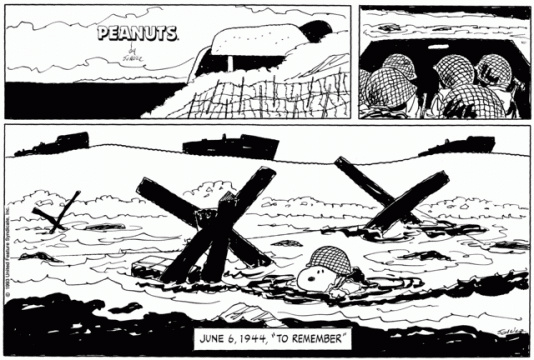
On this day seventy years ago, the greatest military invasion took place - as Allied Forces landed in Normandy, France to begin the liberation of Europe from Germany in World War II.  The day before, on June 5, General Dwight D. Eisenhower gave the go-ahead for Operation Overlord, putting 6,000 ships and more than 176,000 troops into the English Channel for the crossing to designated landing areas on the French coast.  More than 12,000 aircraft were used to ferry parachute troops into France and provide air cover.  As the sun rose over the beaches the land invasions began and by the end of the day - 18,000 parachutists were on the ground and more than 155,000 soldiers had taken Normandy's beaches.

Part of my job responsibilities is to respond to reference requests for military service records.  Unfortunately, the requests for World War II records is dwindling, at least from the "I served in World War II" perspective.  We do get a lot of "my father / grandfather / uncle," etc., served "but he didn't like to talk about it" requests.  One really only has to take a look at the opening of this movie to understand why.

Congratulations (and a huge Thank You) to all of those brave men who fought on this day and those who gave the "last full measure" seventy years ago.

Wednesday, May 14, 2014

Westward Ho!

Two hundred and ten years ago today - at the request of President Thomas Jefferson, Meriwether Lewis and William Clark set out from St. Louis to explore the Northwest from the Mississippi to the Pacific Ocean.  Less than six months earlier the United States finalized the Louisiana Purchase.  After setting out, Lewis and Clark were joined by Sacagawea and in November 1805, they arrived at the Pacific - the first European explorers to reach the Pacific by an overland route from the east.


Thursday, May 1, 2014

The Building of the Empire State

On this day in 1931, the Empire State Building was dedicated.  In Washington, President Herbert Hoover ceremonially pressed a button that lit the building in New York.  The Empire State Building was a marvel of architecture - it was completed in under a year, under budget, and ahead of schedule.  At certain points the building grew four and a half stories per week.  At its completion it was the tallest building, at 102 stories and 1,250 feet high.

The Empire State Building figures very prominently in the life of the Brave Astronaut.  I have been to the top many times, most recently during our Christmas visit to New York.  Mrs. BA and I went to the top when we were still dating and have also brought LBA and SoBA to the top as well.

When I lived in Poughkeepsie, my neighbor used to be fond of saying the line noted above about the building being finished early and under budget - anytime he saw a construction project run amok.

For your enjoyment, please have a look at these photos from the construction of the world's tallest building, until the completion of the World Trade Center in the 1970s.  Sadly, the Empire State Building regained the status of the tallest building in New York after the September 11 attacks, but it has been eclipsed again with the completion of the new Freedom Tower.  The building is currently the fourth tallest in the United States and the 23rd tallest in the world.  Bonus points for listing those in front of it.

Tuesday, January 28, 2014

Space: The Final Frontier

As I am the Brave Astronaut, I try to remember the anniversaries of significant space milestones.  Here in January, we have two that fall one right after the other.
Yesterday was the 47th Anniversary of the launchpad fire that killed astronauts Virgil "Gus" Grissom, Ed White, and Roger Chaffee on the Apollo 1 Mission to the moon.  I have posted about this before - and it is of course, one of the reasons I am known as the Brave Astronaut.  This month, the movie Apollo 13 has been playing with some frequency, and it's one of those movies that I will stop and watch if I come across it.  In that movie, Jim Lovell's (played by Tom Hanks) asks him about the fire that killed Grissom, White, and Chaffee.  Lovell tells his son they fixed the door so that kind of tragedy would never happen again - which it didn't.


As for today's anniversary, 28 years ago, the Space Shuttle Challenger exploded 73 seconds into its mission, killing American teacher Christa McAuliffe and six others: Gregory Jarvis, Judy Resnik, Dick Scobee. Ronald McNair, Michael Smith, and Ellison Onizuka.  The seven are memorialized on a monument at Arlington National Cemetery.  I remember watching the launch of the Challenger (very few people still were, as the shuttle launches had become very routine) and realizing something very bad had happened, by the way the reporters on TV were talking.  As far as shuttle movies go, one of the better ones is Armageddon, which I also spotted in the TV listings the other day.

Space travel has its risks - we should always remember those who gave all so we could expand beyond our terrestrial borders to see what is out there.  Ronald Reagan's speech the evening following the Challenger disaster (when he was supposed to have delivered the State of the Union - something President Obama will do later this evening) was extraordinarily moving.


Friday, November 22, 2013

Reflection on a Dark Day

This morning LBA asked me about the significance of the 50th Anniversary of the assassination of John F. Kennedy.  My first answer was that the killing of an American President had not happened since William McKinley in 1901 (obviously Warren Harding and Franklin Roosevelt had died in office but not at the hands of a killer).  LBA knows about Tecumseh's Curse and he asked about that, too.  My follow up response was that JFK was so young and full of "vigah" - plus he was the first Catholic President as well.  The assassination also played out on national television, bringing a nation (and the world) to a standstill for the weekend.

Most of the reports that you hear often start with, "People who were alive in 1963 can always remember exactly where they were when they heard the news."  For an entire generation of Americans, the day's events are seared in their collective memories.

My mother told me her story many times.  She was bowling in a women's league, while my brother was home sick.  He called the bowling alley to tell my mother what had happened.  She immediately asked for the news to be announced over the bowling alley's PA system.  Everyone in the alley stopped bowling and went home to learn more.  The rest of the weekend was spent watching the news on television.  Of course, in 1963, there were no cable news channels, and only a few TV channels at that.  She always told me of watching Walter Cronkite deliver the news in his shirtsleeves - then as the afternoon turned to evening, he suddenly realized he was not wearing a suit jacket.  Later, when Cronkite returned to the air, he had put on his suit jacket.


There are any number of stories about this seminal event in American History.  Of course, there are the conspiracy theories as well, and there have been a number of "alternate histories" of what could have happened had JFK lived. Where I work, there are countless records about the JFK assassination and I have worked with researchers here and in a previous archives job who were looking into the story of the day's events.

As a "history geek," I can tell you with ease where I was when other significant events took place in history though I was not alive when JFK was killed.  The death of JFK was most certainly a defining moment in history and it brought a generation together not seen again, in my opinion, until the September 11 attacks nearly forty years later.

Tuesday, November 19, 2013

Seven Score and Ten Years Ago Today

Four score and seven years ago our fathers brought forth on this continent, a new nation, conceived in Liberty, and dedicated to the proposition that all men are created equal. 

Now we are engaged in a great civil war, testing whether that nation, or any nation so conceived and so dedicated, can long endure. We are met on a great battle-field of that war. We have come to dedicate a portion of that field, as a final resting place for those who here gave their lives that that nation might live. It is altogether fitting and proper that we should do this. 

But, in a larger sense, we can not dedicate -- we can not consecrate -- we can not hallow -- this ground. The brave men, living and dead, who struggled here, have consecrated it, far above our poor power to add or detract. The world will little note, nor long remember what we say here, but it can never forget what they did here. It is for us the living, rather, to be dedicated here to the unfinished work which they who fought here have thus far so nobly advanced. It is rather for us to be here dedicated to the great task remaining before us -- that from these honored dead we take increased devotion to that cause for which they gave the last full measure of devotion -- that we here highly resolve that these dead shall not have died in vain -- that this nation, under God, shall have a new birth of freedom -- and that government of the people, by the people, for the people, shall not perish from the earth.

Abraham Lincoln 
November 19, 1863